Château de Pontivy
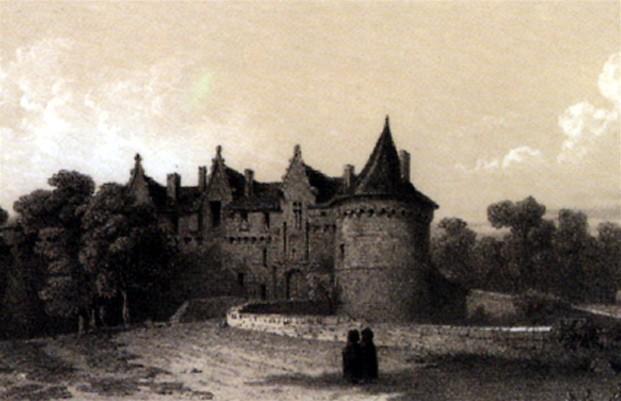
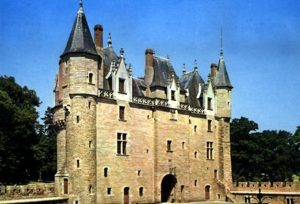
Built in the fifteenth century by Jean II de Rohan, the Château of Pontivy retains from that period two machicolated towers. It was remodelled in the eighteenth century.
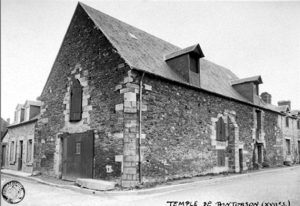
In 1561, Henri de Rohan founded there a Reformed Church which endured until 1684.
In 1589, Pontivy fell into the hands of the League and the Duke of Mercœur. The town was restored to the Rohans in 1598, upon the signing of the Edict of Nantes, and became one of the sixteen places de mariage provided for by the edict.
In the sixteenth century, Pontivy became the capital of the viscounty of Rohan, raised to a duchy by Henry IV. Its economic development, begun in the sixteenth century, continued throughout the seventeenth century.
During the Revolution, the town firmly supported the Republic. In the nineteenth century, Napoleon decided to build a new town, which took the name Napoléonville.
The château chapel has once again been made available to Protestants since 1972.
Château de Josselin
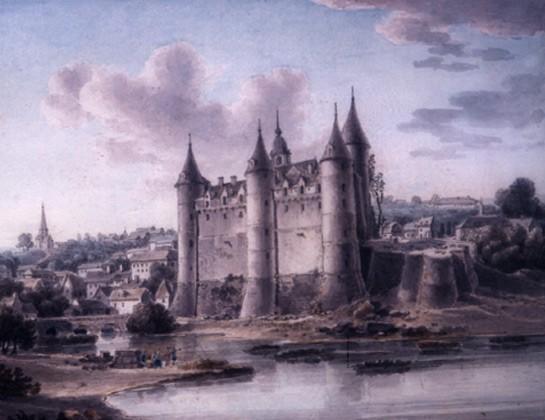
The château of the Dukes of Rohan, a medieval fortress dating from the eleventh century, overlooks the town of Josselin and the valley of the Oust. A residence of the Rohan family from the Middle Ages to the present day, the fortress was dismantled on the orders of Richelieu, abandoned during the seventeenth and eighteenth centuries, and restored in the nineteenth century.
The fortress housed a Reformed community in the sixteenth century, and several synods were held there. It was occupied by the League and the Duke of Mercœur in 1589.
A private residence still inhabited by the Rohan family, the château possesses a fine Renaissance façade. There may be seen the arms of the Rohans and their mottoes: “A plus” and “Roi ne puis, prince ne daigne, Rohan suis.” (« I cannot be a king, I cannot deign to be a prince, I am Rohan. »)
In the former stables of the château, the Doll Museum displays the famous Rohan collection begun in the nineteenth century.