The Reformation First Affected the Towns

Within this Cévennes–Languedoc region, the Reformation first took hold, from 1530–1540 onwards, in the towns: Montpellier, Nîmes, Florac, Anduze, and Uzès.
At Uzès and Florac, it was monks who preached the new doctrines. From 1559, envoys from Geneva organised the first Churches, and thereafter the Reformation spread to Alès, Le Vigan, Ganges, Sauve, Gignac, and even Pont-Saint-Esprit.
In 1560, the Count of Villars, representing the King in Languedoc, organised a severe repression at Aigues-Mortes, Montpellier, and Saint-Jean-du-Gard.
However, from the spring of 1561, the Protestant Churches revived, thanks to Pierre Viret, a reformer from French-speaking Switzerland, who resided at Nîmes and later at Orthez, where the Queen of Navarre had summoned him as professor of theology at the college. In the summer of 1561, a wave of iconoclasm swept across the region, instigated in particular by the minister Tartas, an action for which he was condemned by Calvin.
By the end of the sixteenth century, the Reformed Churches of Languedoc and the Cévennes held a dominant and majority position within local communities.
In 1564, Théodore de Bèze inaugurated at Nîmes the Temple of the Calade.
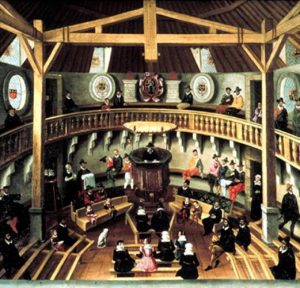
In 1582, the Grand Temple was constructed at Montpellier, much admired for its roof supported by an extraordinary arch.
Neither the Wars of Religion nor even the St Bartholomew’s Day Massacre (1572) succeeded in destabilising the Reformed predominance in Languedoc-Roussillon.
The Wars of the Seventeenth Century
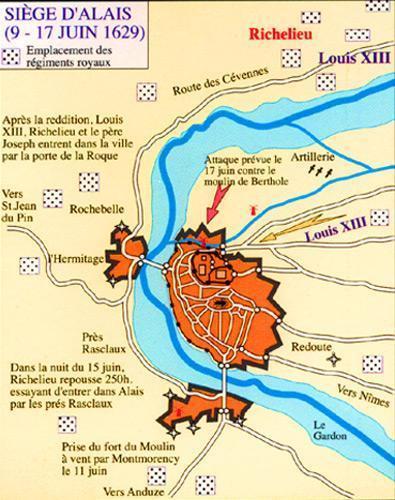
In the seventeenth century, following the death of Henry IV (1610), the situation changed with the wars led by Henri de Rohan (1579–1638). In 1622, after a prolonged siege by the royal army, Montpellier capitulated and its fortifications were destroyed. In 1629, Privas fell and Alès capitulated. The Peace of Alès brought an end to the military power of the Huguenots in the Protestant south.
Catholic missionaries thereafter intensified their conversion efforts, and relentless legal harassment led to the closure and demolition of one temple in two before the Revocation of the Edict of Nantes.
Only Three Religious Buildings Constructed before 1685 Survive Today

- the temple of Le Collet-de-Dèze (Lozère),
- the temple of Vialas (Lozère), a former church returned to the Catholics and then restored to the Protestants in 1804,
- and the temple of Vézenobres (Gard), which became a Catholic church after 1685 and was returned to Reformed worship in 1791.
The dragonnades, initiated in 1681 in Poitou, reached the South. On a large scale, the system was practiced of billeting dragoons in Reformed households, where they committed every manner of abuse; only abjuration secured their departure.
The Revocation and the War of the Camisards
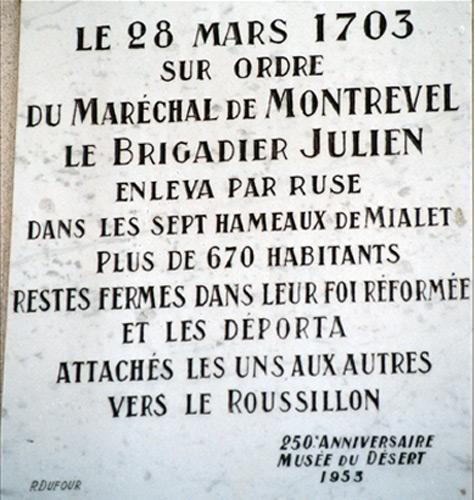
With the coming of the Revocation, the entire Cévennes–Languedoc region was overturned: on 29 September 1685, Montpellier yielded to the royal troops encamped before the city; on 4 October, at Nîmes, 4,000 Huguenots abjured in the cathedral, soon followed by the whole population. Terror spread through the mountains, and the Cévennes in turn collapsed. “There is not a single parish that has not been thoroughly cleansed,” wrote the King’s intendant, Basville. Over a century and a half, 170,000 Reformed believers had filled some 250 temples, yet the authorities strove to efface every visible trace of the Reformed faith.
After the Revocation, the authorities kept the “new converts” under close surveillance. The Abbé du Chayla and his missionaries, men of law supported by armed servants, rigorously enforced the royal measures. At the beginning of 1702, he had the young prophetess Françoise Brès hanged. His severity and lack of clemency provoked a punitive expedition on 24 July 1702, led by Abraham Mazel, Salomon Couderc, and Esprit Séguier. This marked the beginning of the Cévennes War, or War of the Camisards, which engulfed the region from 1702 to 1704, and in both theory and practice continued until 1710, with numerous tragic episodes, including the notorious “burning of the Cévennes” in December 1703. The War of the Camisards mobilised 20,000 royal troops and resulted in the deaths of between 25,000 and 30,000 men, women, and children of both confessions.
In this Protestant south, the assemblies of the Desert, the dragonnades, and the itinerant preachers have left their mark, and places of remembrance abound.