Lyon
Lyon is the birthplace of Pierre Valdo, or Valdès, whose name was given to the Waldensian pre-Reformation movement at the end of the twelfth century. Despite repression, Waldensian communities still subsist today in the Dauphiné, the Luberon, and northern Italy.
The Reformation made its appearance in Lyon as early as 1524, at the Church of Sainte-Croix, with the first Protestant sermon in the French language delivered by Aimé Maigret.
The Reformation found many adherents among silk workers and printers. “Preachings” gathered thousands of followers at La Guillotière.
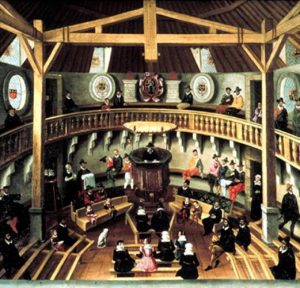
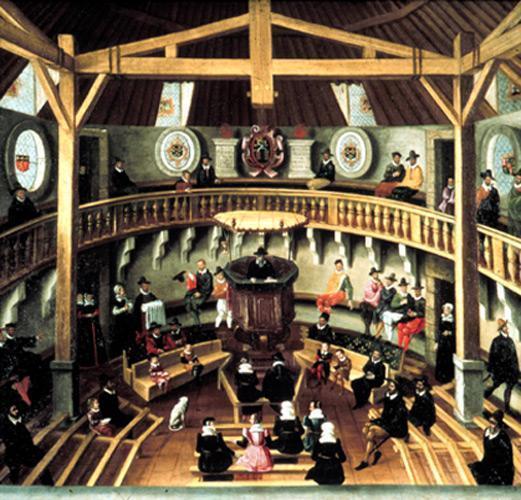
The temple of Lyon known as “Paradis” stands as the emblematic expression of Protestantism in the city during the sixteenth century.
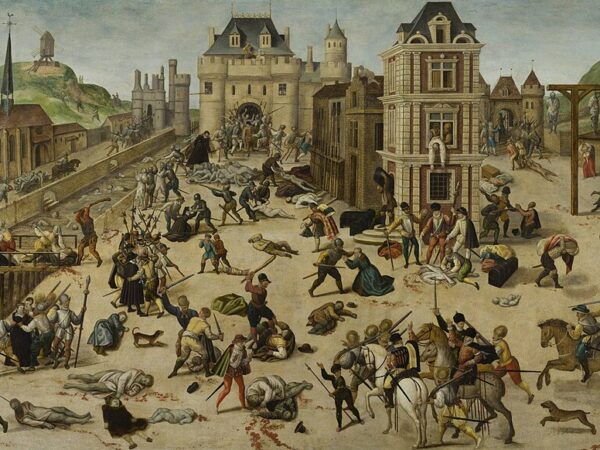
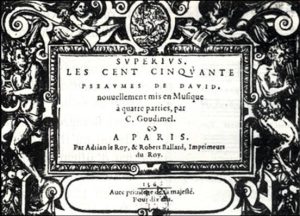
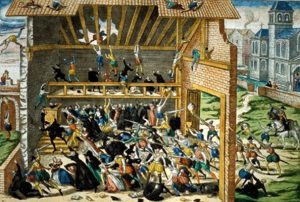
In 1562, the city of Lyon aligned itself with Louis I de Bourbon, Prince of Condé. The Wars of Religion wrought devastation. At the time of St Bartholomew’s Day, 300 Reformed believers were massacred, among them the musician Claude Goudimel, whose body was cast into the Rhône.
After the Edict of Nantes, a temple was erected 12 kilometres from the city at Saint-Romain-de-Couzon; nevertheless, Lyon remained under the strict control of the Roman Church.
Pierre-Scize, Prison for Fugitive Protestants
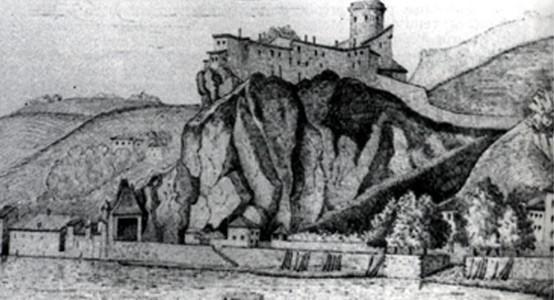
At the Revocation, Lyon became one of the principal transit points for Protestants seeking to reach the Refuge. Many Huguenots were arrested before reaching Geneva and were imprisoned in the prisons of Lyon, notably at the Château de Pierre-Scize.
After the Revolution, in 1803, approximately 3,000 faithful were counted in the church known as “La Croix-Rousse,” composed in part of Genevans and Swiss.
Around Lyon (Rhône and Loire)
In 1536, a conflict between Berne and the Duke of Savoy allowed the establishment of Reformed communities around Thonon; however, after 1564 and the departure of the Bernese, Saint Francis de Sales undertook to bring the “erring” back to the “true religion.”
In 1598, the troops of the Duke of Savoy completed this missionary endeavour: the Reformed were compelled either to abjure or to emigrate. The proximity of Geneva and the Swiss cantons led to a depopulation of Protestant inhabitants.
In the Pays de Gex, 12,000 Protestants were counted in the seventeenth century: at Divonne, Gex, Cessy, Crozet, Ornex, Ferney, Thoiry, Sergy, Challex, and Collonges.
From 1662 onwards, twenty-one temples were destroyed, and the dragonnades of 1685 completed the conversion of the local communities, with the exception of that of Ferney.
To the west of Lyon, the Forez experienced only individual conversions to the Reformation, and small churches at Malleval and Saint-Étienne.
Vienne
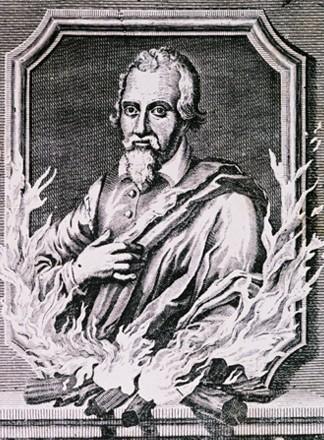
To the south of Lyon, at Vienne, evangelical ideas made only a fleeting impression, despite Michel Servet, who had his Christianismi Restitutio printed there, a work condemned in 1553 by the local clergy.
At Valence, certain “impatient” elements urged the faithful towards actions disapproved by Calvin and Théodore de Bèze. Repression fell in 1560 under Maugiron, lieutenant of the Guise.
Following the failure of the Conspiracy of Amboise in 1560, repression extended to Montélimar and Orange, where, after massacres of Protestants, the Baron des Adrets, at the head of Huguenot bands, carried out terrible reprisals.
Vivarais (Ardèche)
In 1528, a first sign of the Reformation appeared at Annonay: the Lutheran monk Étienne Machopolis preached there against the abuses and superstitions of the Church. One of his successors, Étienne Reinier, was arrested and executed at Vienne (Drôme).
In 1534, centres of “heresy” were reported at Privas and Tournon.
By 1561, Annonay and Aubenas had ministers. Reformed communities developed at Chalençon, Lamastre, Vernoux, and Villeneuve-de-Berg.
In 1598, after thirty years of the Wars of Religion, the Edict of Nantes recognised seventy-five places of worship in Vivarais and granted Protestants several places of security (Privas, Vals, Vallon, Le Pouzin, Boutière, and Baix).
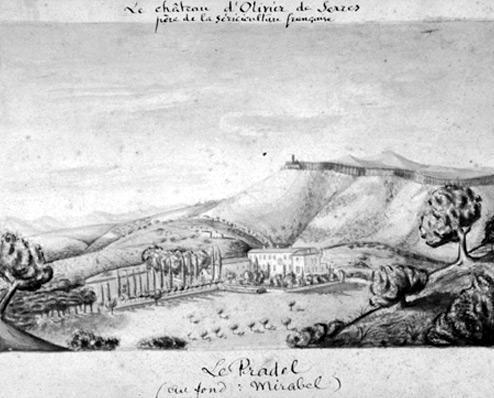
Olivier de Serres, born at Villeneuve-de-Berg, administered his estate at Le Pradel, where he wrote his Théâtre d’agriculture, a veritable rural encyclopedia, published in 1600 (Museum of Le Pradel and statue at Villeneuve-de-Berg).
The Reconquest under Louis XIII
After the assassination of Henry IV in 1610, the military campaigns of Louis XIII gradually reduced Protestant power. The Protestant army of the Duke of Rohan confronted royal forces from 1621 to 1629. In that year, the town of Privas, defended by Saint-André Montbrun, fell and suffered pillage, massacres, and fires. The fortified caves of La Jaubernie at Coux sheltered the Protestants of Privas at that time.
After 1629, Protestants lost all military power and were expelled from Privas a second time in 1664, at the very moment when Louis XIV, through restrictive edicts, was preparing the Revocation of the Edict of Nantes. Temples were progressively demolished.
In 1683, Claude Brousson organised a “passive” resistance, directed in Vivarais by Isaac Homel. Preaching took place on the sites of former temples. Royal troops, by order of Louvois, devastated the region. The dragonnades led to mass abjurations.
Désaignes, an important Huguenot town in the Middle Ages, had built its temple in 1608 at the centre of the village. Demolished by the King’s dragoons in March 1684, the engraved stone from its façade was preserved in the church and reinstated when the second temple was constructed between 1823 and 1844.
In 1685, Louis XIV revoked the Edict of Nantes. Ten per cent of the 40,000 Protestants of Vivarais, despite the prohibition, chose exile and set out for the Refuge.
Clandestine Assemblies

Very soon, for those who remained, small clandestine assemblies were organised, as at Serres-de-Lès; and in 1689, the movement of the “inspired,” introduced into Vivarais by Gabriel Astier, was violently repressed (several hundred died at the Serre de la Palle, where a commemorative stele now stands).
Preachers and “prophets” continued to hold assemblies despite executions and sentences to imprisonment or the galleys.
From 1715 onwards, Antoine Court reorganised a “Church of the Desert” in secrecy.
Pierre Durand was to be the first minister ordained in the Desert.
The Museum of Protestant Vivarais

It is housed at Le Bouchet de Pranles in the home of the minister and his sister Marie Durand, who was imprisoned for thirty-eight years in the Tower of Constance at Aigues-Mortes.
A plaque in the temple of La Pervenche, near Saint-Julien-du-Gua, commemorates three steadfast preachers (Jean Bernard, Jean Rouvière, and Louis Ranc).
After 1789, with the recognition of freedom of religion and worship, there remained 35,000 Protestants, some 12 to 13 per cent of the population, in the département of Ardèche alone, and numerous temples were rebuilt during the nineteenth century.
Dauphiné (Isère, Drôme, and Ain) and Savoie (Savoie and Haute-Savoie)
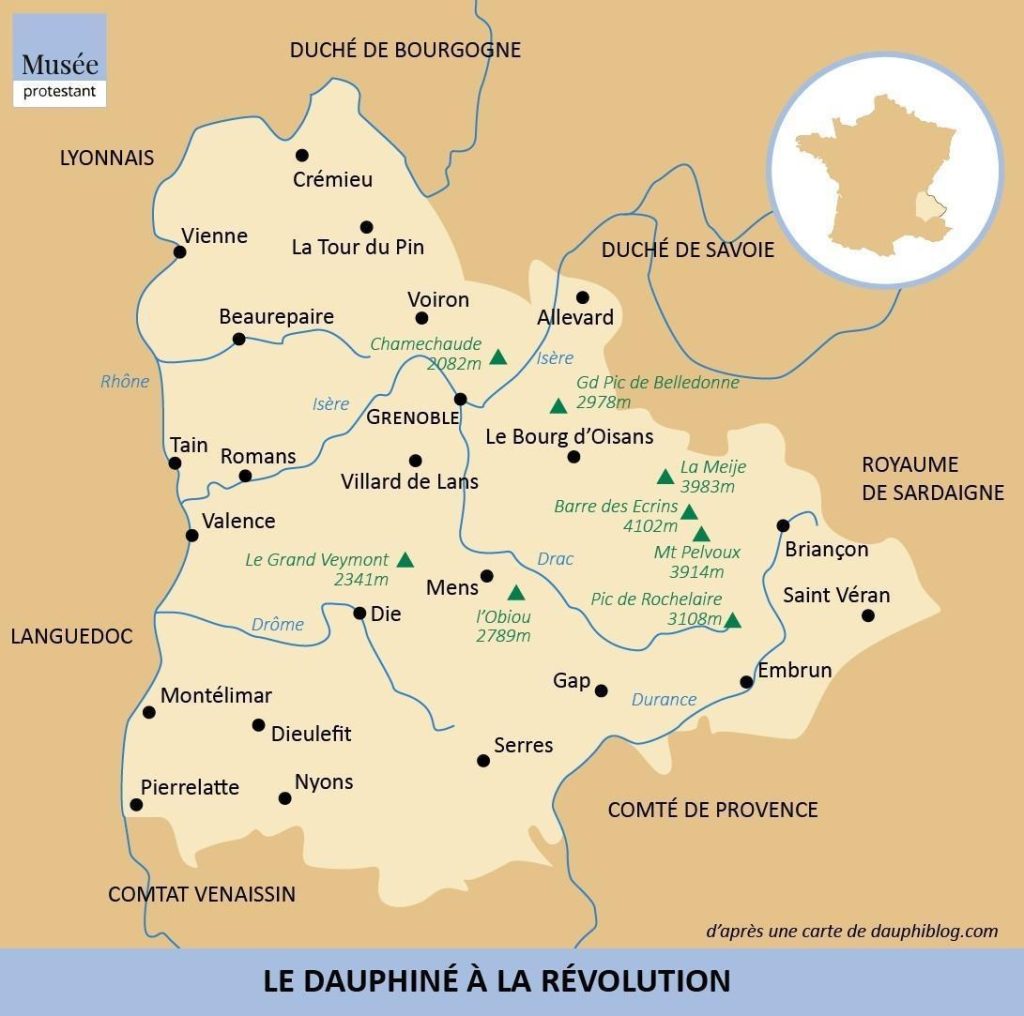
After the Cévennes, Vivarais, Alsace, and the country of Montbéliard, the Dauphiné is one of the regions of France where Protestantism has left particularly deep traces.
Valence

From as early as 1549, the Reformation was preached at Valence, in the Church of the Cordeliers, with the support of Bishop Jean de Montluc, as well as at Montélimar and Romans. In 1559, repression fell under the authority of the Duke of Guise, who governed Dauphiné.
In 1523, Pierre de Sibiville, correspondent of Zwingli and Œcolampadius, preached at Grenoble; he was burned in 1525. Grenoble became a Protestant place of security from 1561, though it experienced violent upheavals. The Duke of Lesdiguières led the Huguenot party during the Wars of Religion, later contributing to the establishment of religious peace before returning to Catholicism under the influence of Francis de Sales.
Guillaume Farel was born in 1489 near Gap, in the hamlet of Les Fareaux.
The adherence to the Reformation of noblemen, bourgeois, and peasants alike led to the flourishing of small churches, as at Dupuy-Montbrun and Lesdiguières.
Modest Temples Were Constructed
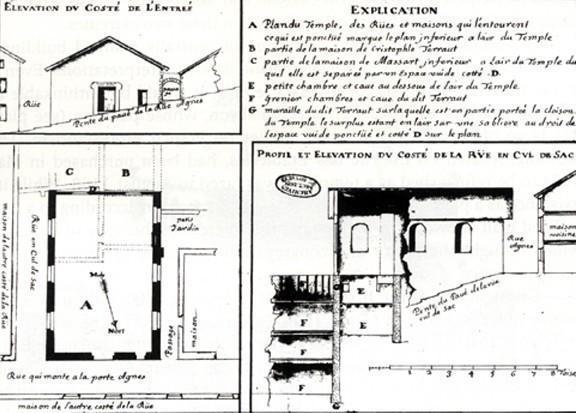
Modest temples were constructed at Pont-en-Royans and Mens-en-Trièves.
In Savoy, Protestant Establishment Proved Difficult
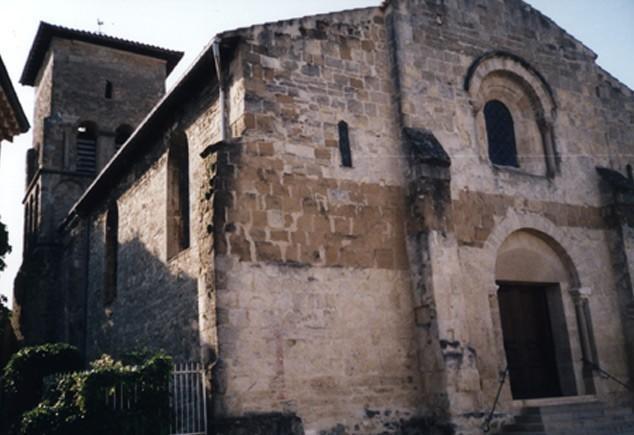
The Dukes of Savoy showed themselves more inclined to eradicate Protestantism than to favour it.
In the seventeenth century, 72,000 Protestants were distributed among eight colloquies:
- Colloquy of Vienne, to the east of Valence, preaching took place at Beaumont-lès-Valence, while the temple of Romans stood at Pizançon.
- Colloquy of Valentinois, Montélimar alone counted 3,000 faithful. Around Dieulefit and Bourdeaux, two-thirds of the population was Protestant. Temples were found at Dieulefit, Vesc, La Bégude-de-Mazenc, Bourdeaux, and Saou; Protestant churches at Crest, Aouste, Loriol, and Livron.
- Colloquy of Diois, at Die, the principal church counted 4,000 Protestants, three ministers, and an academy founded in 1604. Die remained a place of security until 1627.
- At the gates of the Vercors, temples existed at Saillans, Pontaix, and, in Upper Drôme, at Châtillon-en-Diois and La Motte-Chalançon.
- Colloquy of the Baronnies, at Orange, there were 2,400 Protestants, four ministers, two temples, a college, and a university, under the authority of William of Orange, known as the Silent. Protestants were also present at Nyons, Vinsobres, and Condorcet.
- Colloquy of Grésivaudan, Grenoble possessed an influential church, and numerous smaller communities were found in Oisans, the upper Isère valley, the Drac valley, and around Trièves.
- Colloquy of Gapençais, around Gap, some 4,600 Protestants were counted.
- Colloquy of Embrunais, approximately 3,800 Protestants were grouped around Embrun, in the upper Durance valley, in Queyras, at Arvieux, Abriès, Molines, and even Saint-Véran.
- Colloquy of Valcluson, around 11,000 Protestants were assembled to the east of Briançon.
Poët-Laval
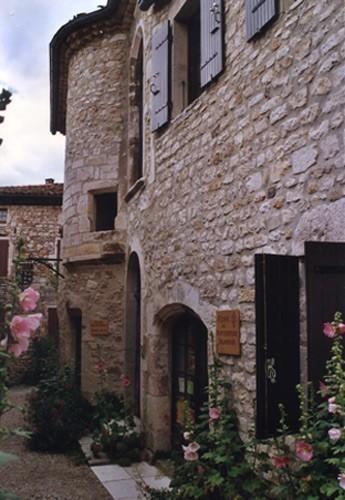
At Poët-Laval, the former temple now houses the Museum of Protestantism in Dauphiné.
The Seventeenth Century: An Age of Persecution
Preceding the Revocation of 1685, repression descended upon the Dauphiné. Temples were destroyed, and the Edict of Nantes was no longer enforced. In 1683, Claude Brousson launched his movement of resistance. Protestants assembled in the “Camp of the Lord” at La Baume-Cornillane, and later in the forest of Saou. The dragonnades followed one after another. Ministers and laymen fled towards Geneva. When the Revocation came, abjurations occurred on a massive scale; even Orange was not spared. The exodus towards the Swiss Refuge intensified and is estimated at 10,000 emigrants.
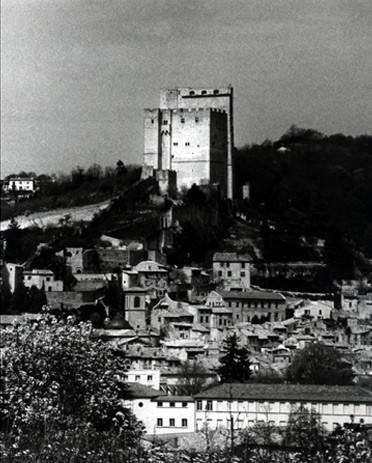
The Tower of Crest filled with prisoners, 247 of whom were condemned to the galleys.
Nevertheless, assemblies continued to be held between 1686 and 1689 at Montmeyran, Dieulefit, and La Motte-Chalançon.
Prophetic movements developed, notably at Saou with Isabeau Vincent.
The Eighteenth Century
Persecutions persisted: Jacques Roger was hanged at Grenoble, and Louis Ranc at Die in 1745.
This sombre period is commemorated today by annual gatherings at the Col de Menée (north of Châtillon-en-Diois) and in the region of Bourdeaux at the “Bois de Vache.”
When freedom of worship was restored, there remained approximately 35,000 Protestants in Drôme, 5,000 in Isère, 36,000 in Hautes-Alpes, and 500 at Orange, then attached to Vaucluse. Protestants were found chiefly outside the towns, in rural areas, where they were villagers, farmers, silk-rearers, and stock-breeders, together with a few small industrial proprietors in paper at Aouste-Blacons and in wool at Die and Dieulefit. In the Hautes-Alpes, the restoration of Protestant communities proved more difficult.
It was more readily achieved in Isère, around Mens, the “Little Geneva” of the seventeenth century.
The Protestant imprint endures in Queyras and the Hautes-Alpes, where the museum of Mont-Dauphin recounts the emigration of the inhabitants of Queyras and the history of the Waldensians.