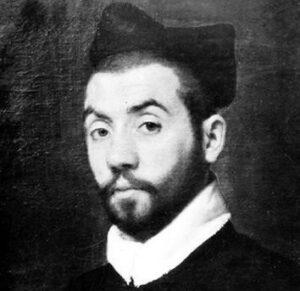
The life of Theodore Beza
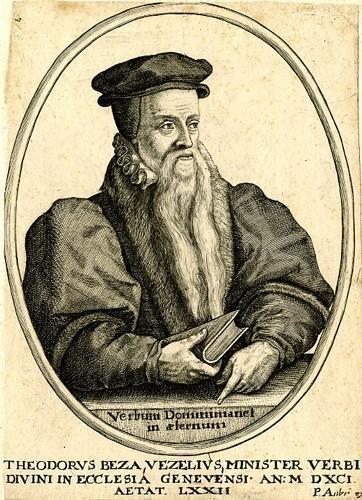
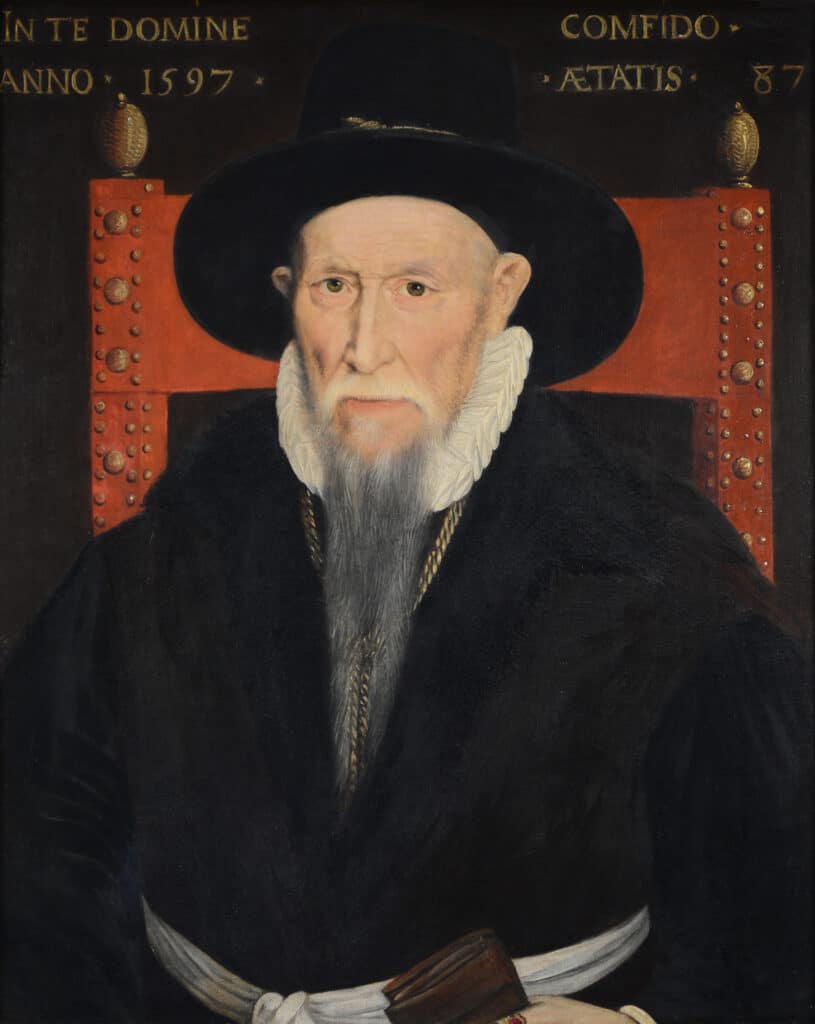
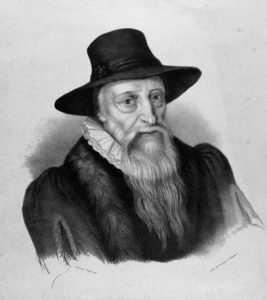
He was born in Vézelay in 1519. When he was eight years old he was brought up by a tutor, Melchior Volmar, a Lutheran who taught him Greek, Latin and Hebrew. He furthered his studies in Bourges where he read Law. With Volmar he became an avid reader of the Bible, and was very impressed by a treatise of Heinrich Bullinger (1504-1575), the successor of Zwingli (1484-1531) in Zurich, who ‘made him discover true piety’ as he himself put it. Meanwhile he lived a joyful student life, deepened his knowledge of languages and wrote poetry.
In 1548 after he was ill, he converted to Protestantism, married and left for Geneva where he developed unbounded admiration for Jean Calvin. Pierre Viret requested him to hold the Chair of Greek at the Lausanne University where he often met with theologians and became a strong advocate of the Reformation.
He soon became a prominent figure in the world of the Reformation along with Jean Calvin, Farel and Viret.
He stayed in Lausanne until 1558 when he settled down in Geneva, where he taught theology and law. He became Calvin’s right-hand man.
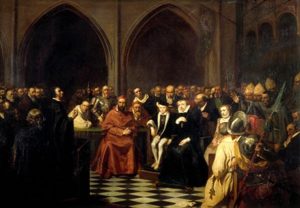
In 1562, at the Colloquy of Poissy, Theodore Beza refused to compromise on the content of the last supper, and definitely refused any possible coexistence of the two religions within de Kingdom of France.
During the second war of religion (1562-1563) he was in Orléans as secretary of Prince Louis de Condé.
When he returned to Geneva he succeeded Calvin at the head of the Company of pastors upon the latter’s death in 1565. In 1580 he fell ill and gave up his role in the Company of pastors. He spent the rest of his life in Geneva and was devoted to theology, literature, history and poetry. He advocated the Reformed doctrine and promoted the organisation of Protestant Churches in France. He corresponded with Protestant princes to win the German States’ involvement in fighting the League.
He died in 1605.
The defence of Calvinism, Theodore Beza a theologian
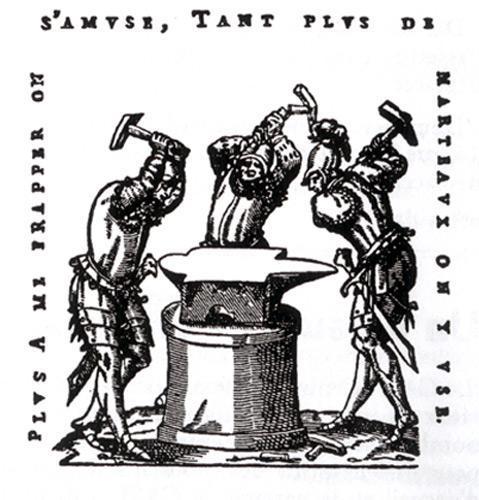
In the 16th century, the Reformed Churches had the Roman Catholic Church in France as an adversary, and the Lutheran Church in the Holy Roman Germanic Empire as a competitor.
The former was supported by the Council of Trente and by the French Royal family, whereas the sovereigns of the great German States wished to bring all the Protestants together in their Church.
Beza strongly defended the Reformed standpoints on predestination and on the Last Supper against the Lutherans. But he was cautious because French Calvinists needed the money and the mercenaries from the German States and Swiss Cantons to resist in France.
At the Colloquy of Montbéliard, 1586-1587, he defended the Calvinist interpretation of the spiritual presence of Christ in the Eucharist opposed by Jacob Andrea, a Lutheran counsellor of the Duke of Wurtenberg, who stubbornly defended the real presence of Christ.
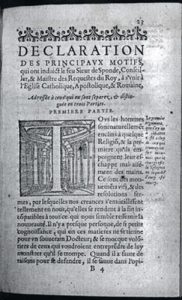
He left a great number of theological writings to defend what he considered to be the Truth of the Reformed dogma, not willing to grant any concession.