Maine
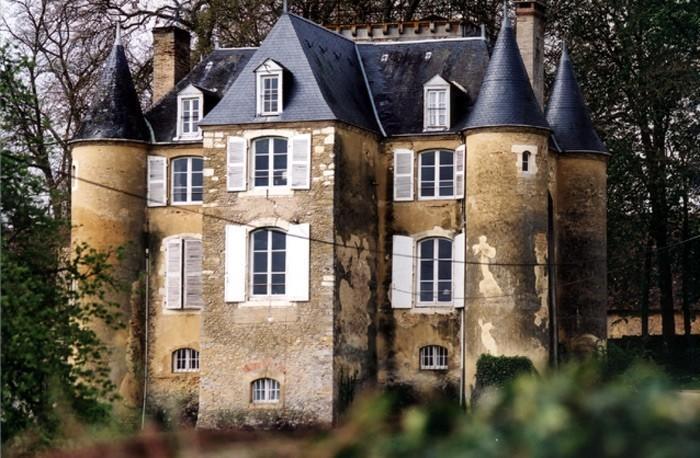
In the sixteenth century, Mamers, Bellême, and Château-du-Loir proved receptive to the ideas of the Reformation. Le Mans embraced the Reformed cause in 1562 following the appeal of Condé. Laval became a Protestant place of security. Despite these exceptions, the Reformed population of Maine did not exceed 2,500 Protestants.
Certain traces remain:
- at the Château d’Aillères, between Alençon and Mamers, whose garden is said to have served as a cemetery for the Reformed
- at Saint-Aignan, to the north-east of Le Mans, where worship continued to be celebrated even after the Revocation;
- at La Goupillère, near Tuffé, where the keep of the castle served as a temple;
- at Ardenay, to the east of Le Mans, where a temple existed until 1665, after which worship was held in the castle;
- at La Suze, to the south-west of Le Mans, where the lord of the castle, Gaspard de Champagne, married a daughter of Coligny.
Anjou

The Château of Bazouges-sur-Loir, on the borders of Anjou, belonged to a Protestant family, the La Vayrie, one of whose members was buried in the cave of the temple at Saumur.
Angers was, together with Paris, Meaux, and Poitiers, one of the first four Reformed communities organised as a consistory, with minister, elders, and deacons.
The minister Jean Le Maçon, a native of Anjou who was persecuted and took refuge in Paris, was instrumental in introducing Reformed ideas to Angers, a process facilitated by the influence of academic circles and the sympathy of the diocesan bishop.
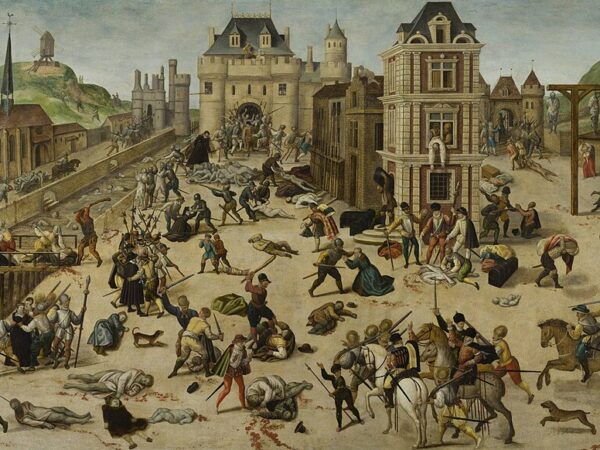
After the St Bartholomew’s Day Massacre (1572), of which Le Maçon was a victim, the Protestant community of Angers survived only with difficulty.
To the west of Angers, at Baugé, a commemorative plaque in the Faubourg Saint-Michel marks the site of the Protestant temple of Beauregard.
Nearby, at Le Breil du Foin, lived Diane de Méridor, the “Lady of Montsoreau,” made famous by Alexandre Dumas.
The Château of Montsoreau belonged to the governor of Saumur, Jean de Chambres, who, at the time of St Bartholomew’s Day, murdered the King’s lieutenant and three ministers, including Jean Le Maçon.
Near Bourgueil, at the place known as Les Réaux, Guillaume Briçonnet had the Château of Plessis-Rideau constructed. Tallemant des Réaux wrote his Historiettes there and had his daughter Olympe baptised by the minister Moïse Amyraud. His other daughter, Charlotte, having refused to abjure at the Revocation, was imprisoned in the Château of Saumur and subsequently expelled from France in 1688.
At Bourgueil, a house remains which served as a temple in the sixteenth century.
Saumur
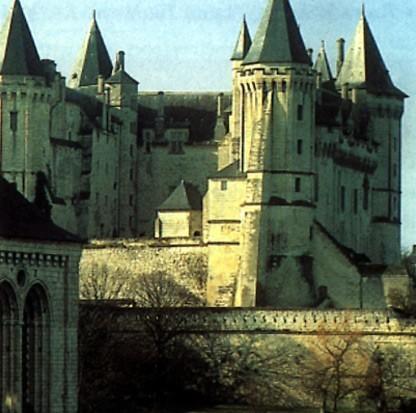
Saumur became a place of security in 1589. Its governor for approximately thirty years was Philippe Duplessis-Mornay (1540–1623), a faithful supporter of Henry IV. It was he who endowed the town with its fortifications and its castle, which would later serve as a prison for Huguenots at the time of the Revocation.
Of the Protestant Academy founded by Duplessis-Mornay in 1599, a wall still remains (between Rue Saint-Jean and the Hôtel de Ville). Moreover, at 2 Rue des Payens and 11 Rue du Temple, one may see the residences of two seventeenth-century Protestants: Marc Duncan, mathematician, and Louis Cappel, professor of Hebrew and theology.
The Château of Boumois near Saumur
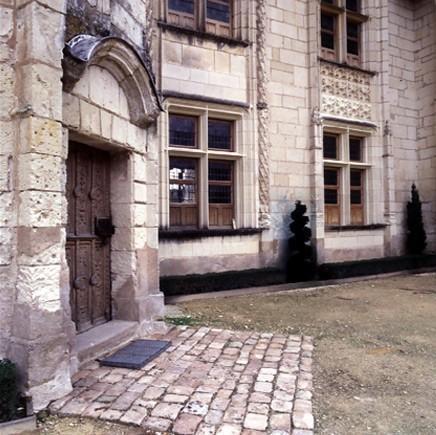
It belonged to the Protestant family of Thory.
A Protestant Museum in Vendée
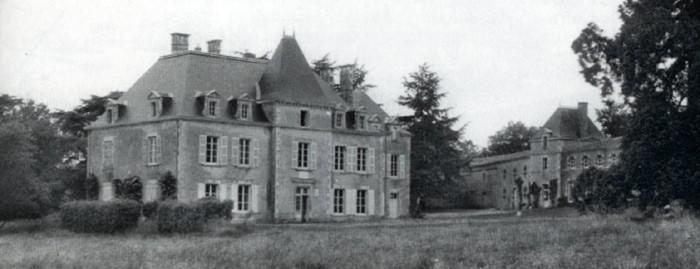
At the locality known as Bois-Tiffrais, to the south-west of the commune of Monsireigne, stands a dwelling which was a Reformed residence from the sixteenth century and has now become the Museum of Protestant France of the West, a site commemorating the Protestant history of Vendée.
From the sixteenth century onwards, Fontenay-le-Comte, an artistic and literary centre of the Renaissance, became a focal point of the Reformation. The house of the procurator Billaud, in Rue La Fontaine, served as a meeting place for the Reformed.
Other Protestant centres developed around Foussais, Bournezeau, Mouchamps, and Talmont.
In the Bocage of Vendée
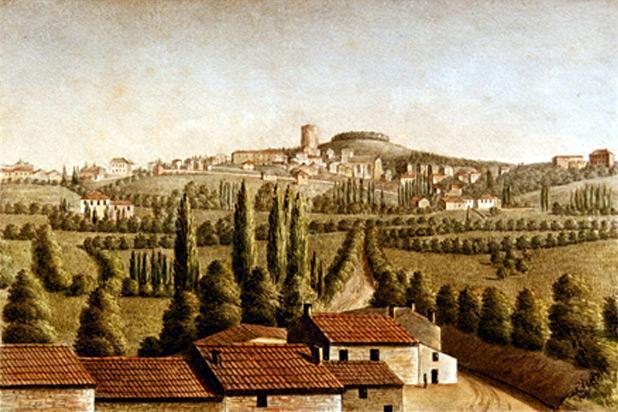
In the seventeenth century, present-day Vendée counted approximately 20,000 faithful, chiefly rural, with the exception of Fontenay-le-Comte, and with a strong concentration in the bocage of Vendée, particularly around Chantonnay, Pouzauges, and Mouchamps. At the time of the Revocation, certain places served as refuges, notably at Saint-Michel-Mont-Mercure, at the Château de la Bonnelière, built in the sixteenth century and used for worship in the eighteenth. These Protestant areas endured through the Revolution and demonstrated their patriotism.
The Revocation of the Edict of Nantes proved fatal to the scattered Reformed communities of western and central France.
After the Revolution, approximately 3,000 Protestants remained in Vendée, principally at Pouzauges.
In 1804, the extent of the damage sustained by Protestantism could be assessed: no Reformed believers remained in Maine-et-Loire, only 300 in Loire-Atlantique, but around 30,000 in Deux-Sèvres, and 3,000 in Vendée.