Nîmes, a Protestant City
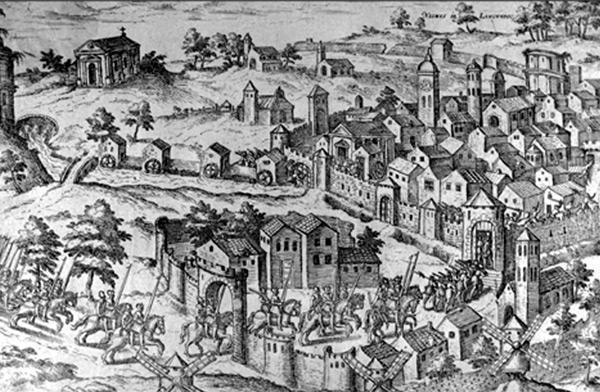
‘This city, which some delight in calling “the French Rome” on account of the beauty of its ancient monuments, is also, like Geneva, a Protestant Rome, a metropolis of Huguenot spirituality.’ (A. Chamson, La France Protestante, p. 339)
From as early as 1533, an Augustinian monk was accused there of preaching the Gospel.
In 1561, the minister Mauget organised the Consistory of Nîmes, and from 1562 Catholic worship was prohibited there.
In 1566, the Temple of La Calade was built, capable of accommodating 5,000 worshippers.
From the “Michelade” to the War of the Camisards
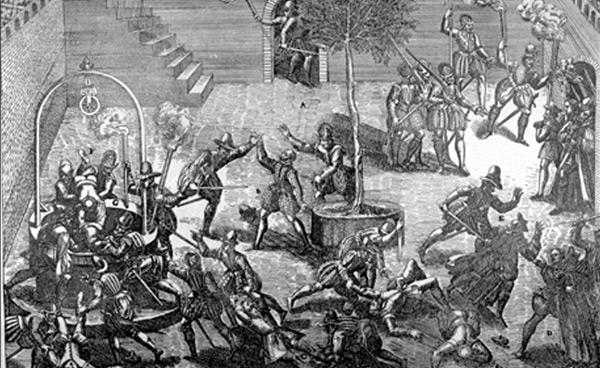
In 1567, Catholics were massacred on St Michael’s Day.
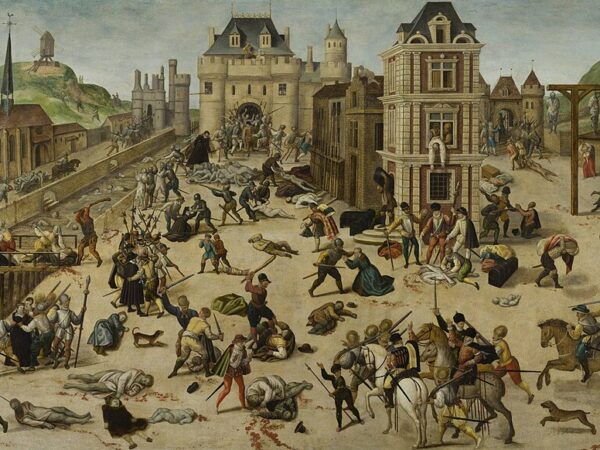
Nîmes escaped the St Bartholomew’s Day Massacre owing to its pursuit of a “path of union”.
A stronghold of Huguenot military resistance and later a political centre for the Reformed, Nîmes became the residence of the Duke of Rohan.
In 1610, the Temple of Saint-Marc (seating 1,000) was built in the Grand-Rue. It was demolished in 1664.
After having instilled terror, the Governor of Languedoc, Noailles, and the Intendant Basville entered Nîmes on 3 October 1685. They obtained mass abjurations, including those of ministers, in the cathedral.
Fulcran Rey defied the authorities by organising religious gatherings in the city, and the inhabitants of Nîmes held their worship in the Moulin de l’Agen (present-day 1 Rue Colbert). Marshal de Montrevel massacred those assembled and burned the mill on Palm Sunday, 1 April 1703.
In the Jardin des Récollets, on 16 May 1704, a meeting took place between Jean Cavalier and Marshal de Villars.
After the War of the Camisards
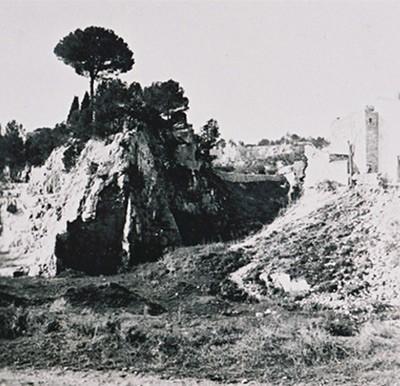
After the end of the Camisard War, assemblies of the faithful continued in the vicinity of Nîmes, notably at the quarry of Lecques.
At the Baume des Fées in January 1720, the participants were surprised; two women were imprisoned in the Tower of Constance, four men were condemned to the galleys, and nineteen were deported.
From 1741 onwards, the Protestant community of Nîmes was marked by the influence of the Rabaud family.
At the End of the Eighteenth Century : A Temple for the Protestants
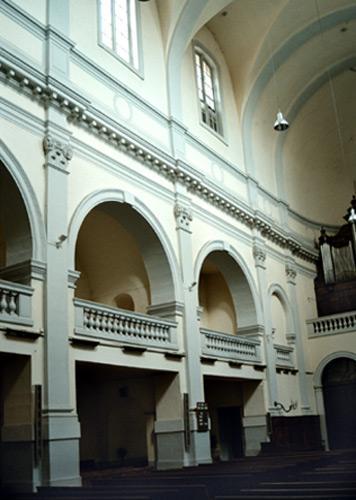
In 1791, the church of the Dominicans was granted to the Protestants of Nîmes and became the Great Temple. On its pediment may be read the inscription: “Edifice dedicated to religious worship by a private society, peace and liberty.”
In 1803, the Petit Temple was established in the former church of the Ursulines (Rue du Grand Couvent).
The Protestant Cemetery (Route d’Alès)
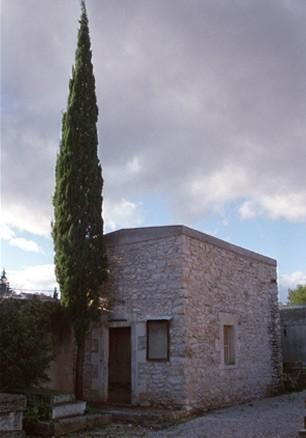
The Protestant cemetery (Route d’Alès) has preserved, under the name of the “Sacristy of the Desert”, an ancient building dating from the period of the Desert.