A stroll through Protestant Orléans
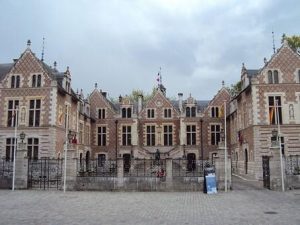
Since 1306, Orléans has possessed a university renowned throughout Europe. From the fourteenth century onwards, the University of Orléans established itself, alongside Bologna, as the principal university for the study of Roman law in Europe. The theses of Martin Luther spread there through teachers such as Melchior Wolmar. John Calvin, who arrived in Orléans in 1528 at the age of nineteen to study Roman law under Pierre de l’Estoile, discovered the Reformation there. The Reformation thus became established in a city that was Catholic, royalist, and profoundly marked by its liberation in 1429 by Joan of Arc.
By the middle of the sixteenth century, Orléans was regarded as one of the cradles of Protestantism. Nicknamed the “New Geneva”, the city hosted the third National Synod in 1562, and Louis I de Bourbon, Prince de Condé made Orléans the headquarters of the Protestant cause. In 1563, Francis, Duke of Guise laid siege to the city with twenty thousand men, when he was assassinated. From 1568 to 1572, Orléans became the frontline of the Catholic reconquest. The city suffered around one thousand victims during the St. Bartholomew’s Day massacre. Orléans finally submitted only in 1594 to Henry IV of France, who came in person to besiege the city.