The Pastor
François Rochette (1736–1762) was born in Vialas in the Cévennes into a Protestant family that already included several victims of persecution. At the age of seventeen, the synod sent him to study theology at the French Seminary in Lausanne; on 8 January 1760, he was ordained as a pastor.
Upon his return to France, he immediately began his clandestine and itinerant ministry in the Agenais and subsequently in the Quercy, at a time when the mere fact of being a pastor was punishable by death. On 14 September 1761, he was arrested near Montauban, at Caussade, now within the department of Tarn-et-Garonne.
The following day, three Protestant gentlemen, the brothers Henri, Jean, and Joachim de Grenier, who were glassmakers by profession (one of the few occupations not entailing the loss of noble), attempted to free him and were immediately arrested.
Attempts at Defence
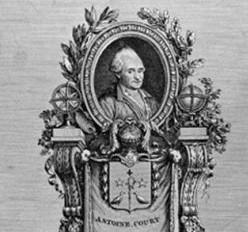
The Protestant community, and in particular Pastor Paul Rabaut, undertook various efforts to save Rochette and the Grenier brothers, but without success. The Parliament of Toulouse, in the midst of the Calas Affair, found them guilty of heresy and sentenced them to death on 18 February 1762. Subsequently, in his work Les Toulousaines (1763), Antoine Court de Gébelin called for the rehabilitation of François Rochette, who had formerly been his pupil at the Seminary of Lausanne.
Execution
Rochette and the Grenier brothers were executed the day after the judgement, on the Place du Salin in Toulouse. The pastor, aged twenty-six, was hanged, whilst the three brothers, by reason of their noble rank, were beheaded. An immense crowd attended in silence, deeply impressed by their steadfast refusal to recant.
Rochette was the last pastor executed under the Ancien Régime, during the crisis of the 1760s. Indeed, the second half of the eighteenth century witnessed a gradual easing of persecutions, with the exception of a brief period of renewed repression caused by the Seven Years’ War (1756–1763), between France, allied with Austria, and England, allied with Prussia.