Moïse Amyraut
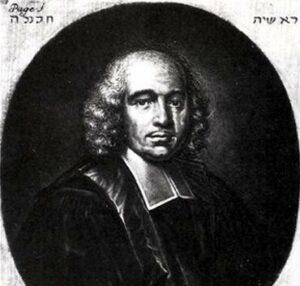
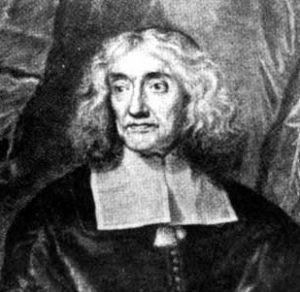
Moïse Amyraut (1596–1664) was both a pastor and professor at the Academy of Saumur. He published several works, among them Traité des religions contre ceux qui les estiment indifférentes (Treatise on Religions against Those Who Consider Them Indifferent, 1631) and Apologie pour ceux de la religion (Apology for Those of the Reformed Religion, 1647), a vigorous defence of Protestants accused of challenging royal authority.
Charles Drelincourt
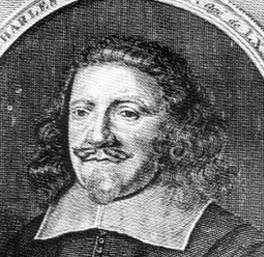
Charles Drelincourt (1595–1669) was the pastor of the celebrated Protestant church at Charenton-le-Pont. His works achieved considerable renown and were translated into several languages. These include Catéchisme ou instruction familière sur les principaux points de la religion chrétienne (Catechism, or Familiar Instruction upon the Principal Points of the Christian Religion, 1642), Avertissement sur les disputes et le procédé des missionnaires (Warning concerning the Disputes and Methods of Missionaries, 1651), and Consolation de l’âme fidèle contre les frayeurs (Consolation of the Faithful Soul against Fear).
Exile religionis causa
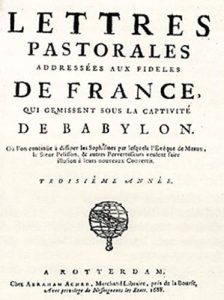
Likewise, towards the end of the century, it was again in the philosophical and theological sphere that the two principal Protestant thinkers distinguished themselves: Pierre Bayle, chiefly renowned for his Dictionnaire historique et critique (Historical and Critical Dictionary), and Pierre Jurieu, noted for his Histoire critique des dogmes et du culte (Critical History of Dogmas and Worship, 1704) and his Lettres pastorales aux fidèles qui gémissent sous la captivité de Babylone (Pastoral Letters to the Faithful who Groan beneath the Babylonian Captivity, 1686–1689).
Both men chose exile in the Netherlands at a time when religious liberties in France were being progressively curtailed, culminating in the Revocation of the Edict of Nantes in 1685, which prohibited Protestantism throughout the kingdom.
Letters, Chronicles, and Memoirs
Among men of letters, mention must also be made of Valentin Conrart (1603–1675), who played a major role in the literary world of his time, though he published nothing during his lifetime; Théophraste Renaudot (1584–1653), regarded as the first French journalist and founder of the Gazette de France (1631); and, in another vein, Gédéon Tallemant des Réaux (1619–1690), whose Historiettes offer a vivid and realistic portrait of the society of his age.
One should also mention Maximilien de Béthune, Duke of Sully (1560–1641), who in his memoirs, entitled Économie royale (Royal Economy), displayed remarkable gifts as a memoirist.