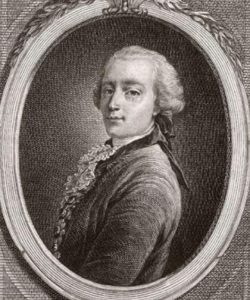
Jean Gal, Preacher
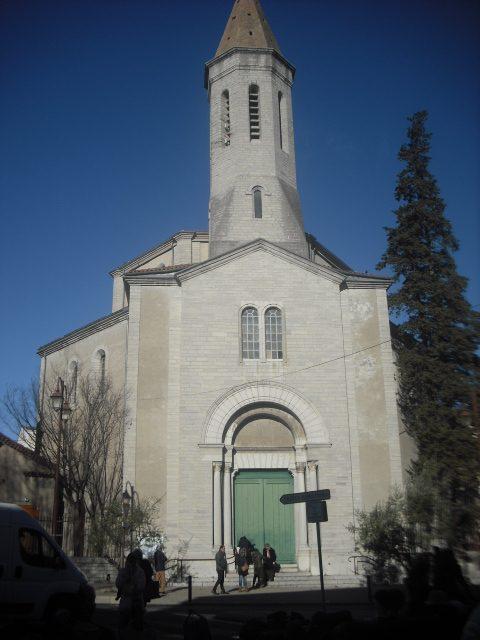
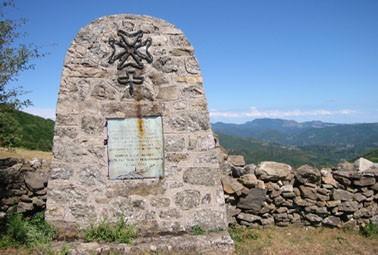
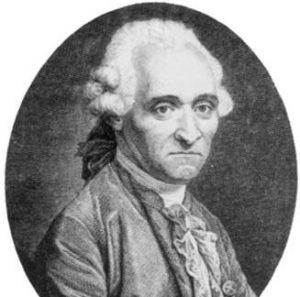
Jean Gal was born at Saint-André-de-Valborgne, in the Cévennes, in January or February 1720. In accordance with the law applicable to the so-called “New Converts”, he was baptised by the parish priest on 4 February. Nevertheless, he received a Protestant upbringing at home and, by the age of eighteen, had resolved to enter the pastoral ministry. He was first accepted as a candidate and spent four years accompanying a minister. From 1742 onwards, he was appointed a preacher (prédicant) and authorised to conduct assemblies.
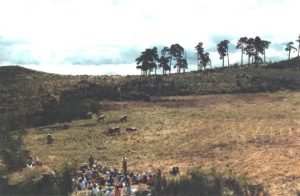
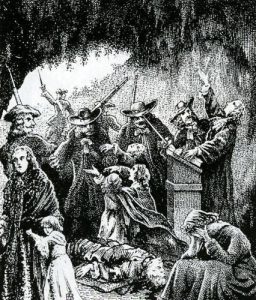
One of the first assemblies over which he presided was held at the Col de Mouzoulès, where he appears to have shown a lack of prudence. When the alarm was raised, he refused to take heed and continued the service. Eleven people were seized by the dragoons: three men were sentenced to the galleys, while eight women were captured. Seven were imprisoned in the Tour de Constance, and a ten-year-old girl was sent to a convent at Anduze (Gard).
Despite this incident, he continued his ministry as a preacher, although little information survives concerning these early years.
Difficult Beginnings

On 29 June 1745, Jean Gal was recognised as a ministerial candidate (proposant) at the Synod of Valleraugue, together with several fellow students. He subsequently allied himself with two of them against the minister Jacques Boyer, who was considerably their senior and had contributed to Jean Gal’s training. The three became known as the Triolet and were sharply criticised in the congregations that supported Pastor Boyer.
In October 1745, at the Synod of Thoiras (Gard), they were publicly reprimanded, forbidden to conduct worship services, and sent to the Seminary of Lausanne.
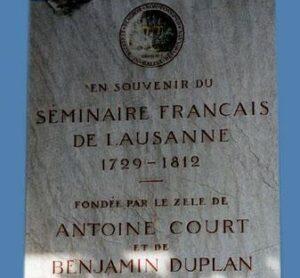
Jean Gal remained at the Lausanne Seminary for less than a year, from November 1745 to September 1746. There he formed a friendship with Antoine Court and maintained a regular correspondence with him until the latter’s death.
Upon his return to France, he encountered serious difficulties in being reinstated within the Church, where memories of his disputes with Pastor Boyer remained vivid. He was not formally admitted to the ministry until 1748.
Pastor of Ganges During the Heroic Desert
Jean Gal was ordained on 8 September 1748. He was then appointed minister to the region of Saint-Hippolyte and Ganges, that is to say the Lower Cévennes. Ganges was dominated by the silk-stocking industry, whilst Saint-Hippolyte-du-Fort was renowned for its tanneries. Both were thriving commercial towns enlivened by fairs held four times a year.
From 1748 to 1760, the period of the Heroic Desert was still in progress, and persecution remained frequent. Whenever military campaigns ceased, soldiers returned to Ganges and the neighbouring towns. In some years, it became exceedingly difficult to hold assemblies, forcing Jean Gal into hiding. Despite the dangers, he married a young widow, Catherine Fabre, in June 1750. The couple had one daughter.
On 28 November 1751, he presided over an assembly at Roquedur attended by approximately 3,000 people. Following a denunciation, the gathering was surrounded by soldiers, although only three men were captured.
In 1752, persecution intensified and one minister was executed on the Esplanade of Montpellier. Jean Gal considered leaving France, but a temporary easing of repression persuaded him to remain. That same year, his brother was accepted as a ministerial candidate and sent to the Seminary of Lausanne. In 1757 he became minister at Le Vigan.
From 1753 onwards, Jean Gal no longer served Saint-Hippolyte, which was attached to the parish of Lasalle. He received a call from the church at Bordeaux but declined the appointment, although he undertook a two-month missionary tour there.
In 1754, persecution became even more severe, making assemblies impossible. He therefore wrote sermons and circulated them among Protestants. When another minister was executed in August 1754, he resolved to seek refuge in Switzerland, remaining there until July 1755.
Correspondence During the Period of the Tolerated Desert
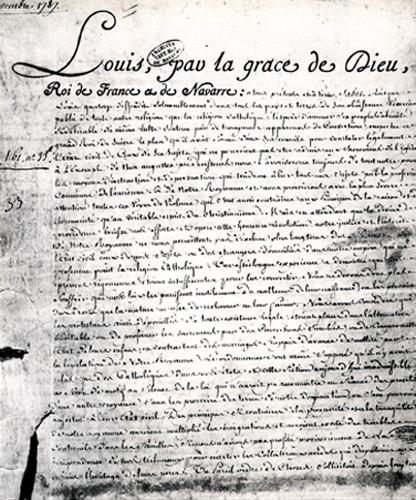

From 1760 onwards, a new period began: that of legal clandestinity, commonly known as the Tolerated Desert.
Jean Gal once again received a call from Bordeaux, as well as an offer from the King of Denmark, both of which he declined in order to remain at Ganges.
For Jean Gal, this period was characterised by intense literary activity in addition to his parish ministry.
He maintained a substantial correspondence with Pastor Paul Rabaut. His aptitude for correspondence was recognised at the National Synod of 1763, where he was appointed correspondent for the other Protestant provinces of France. Consequently, he exchanged letters with numerous churches, but particularly with Pastor Pougnard of Poitou, known as “Dézérit”.
He also corresponded with Antoine Court’s son, Court de Gébelin, who had been appointed deputy of the Protestant Churches in Paris.
In 1764, his wife died and, in 1769, he married Anne Gervais.
In 1767, he met the Protestant man of letters Laurent Angliviel de La Beaumelle and maintained a lengthy correspondence with him.
He also corresponded with the philosophers Jean-Jacques Rousseau and Voltaire. To Rousseau he submitted the manuscript of his Letter to the Bishops. With Voltaire he maintained regular correspondence until the philosopher’s death, regarding him as a champion of religious tolerance.
During these years he wrote numerous works in defence of Protestantism and tolerance.
His final years were marked by discouragement and disappointment with the Edict of Toleration of 1787, which granted Protestants civil rights but not freedom of worship. Nevertheless, he was the first person in Ganges to have both of his marriages officially registered, an example soon followed by all his parishioners.
Jean Gal died on 17 August 1790, having served as minister at Ganges for forty-two years.
His gravestone is now set against the side wall of the Temple of Ganges. Its inscription reads:
Here lies J. Gal Pommaret, most worthy pastor of the Church of Ganges, having served it for forty-five years. Aged seventy-two years, deceased on 17 August 1790.
(Contemporaries were often imprecise regarding dates and ages, for Jean Gal-Pomaret actually died at the age of seventy and had served Ganges for forty-two years.)
The Literary Work of Jean Gal-Pomaret
In addition to his pastoral ministry in Ganges and the surrounding area, Pastor Jean Gal-Pomaret devoted considerable time to writing. Through his correspondence and numerous publications, he sought to explain and defend Protestantism. These works reveal a lucid mind, extensive learning, a strong interest in philosophy and the Enlightenment, and a consistent commitment to the cause of tolerance.
Several of Jean Gal’s works were never published but remain preserved in family archives. Among them is Controversy between Monsieur de Barral, Vicar General of Montpellier, and Gal-Pomaret, Pastor of Ganges (1759), in which he defended Protestantism against the attacks of M. de Barral.
His Letter to the Bishops of France, Accompanied by Some Reflections on Tolerance by a Minister of the Desert was published in 1766 and enjoyed considerable success. It helped establish his reputation beyond his native province.
In 1778 appeared The Christian by Conviction and by Sentiment, or Faith without Uncertainty and Piety without Superstition. In this work, divided into five sections (God, Christ, Scripture, Religious Practice, and Tolerance), Gal-Pomaret sought to equip Protestant believers to defend their faith more effectively. He drew extensively upon Scripture, while also citing both ancient and modern philosophers.
In 1779, there was published at Neuchâtel The Catechism in a New Form, or the Catechumen Instructed and Admitted to Holy Communion. The work comprises three parts:
- The nature of humanity;
- Instruction in sacred history;
- Instruction concerning the various religions and the excellence of Christianity.
Despite receiving favourable reviews, the catechism attracted little attention in France and was not widely used.
In 1783 appeared The Good Father, or the Protestant Christian. This was Jean Gal’s principal work. Although originally composed during the 1760s, it was revised and refined throughout his life. It is a popular exposition of Protestant belief, demonstrating how Protestant doctrine is founded upon the Bible while also presenting and discussing opposing viewpoints. The final chapter addresses the theme of tolerance, a subject particularly dear to Gal-Pomaret. The work was republished twice during the nineteenth century.
His final work, completed shortly before his death but never published, may be regarded as his spiritual testament: Jesus Christ Sought, Found, and Defended against the Unconvinced of Our Time.