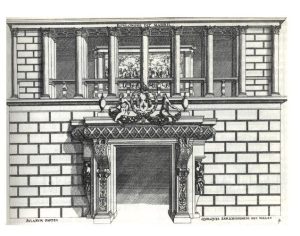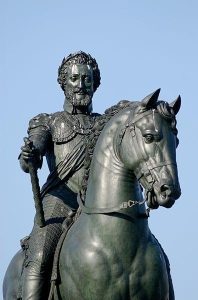
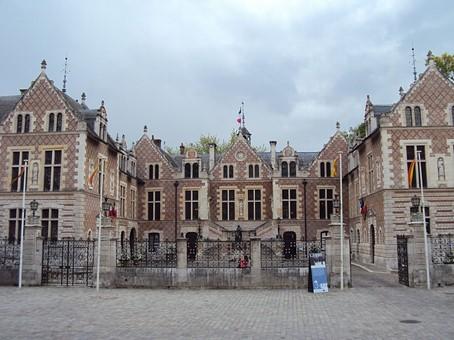
Built between 1530 and 1548 for Jacques Groslot, Chancellor to Marguerite de Navarre, grandmother of Henry IV of France, this building, also known as the Grande-Maison de l’Étape, the Governor’s House, or the Intendance, is attributed to the Protestant architect Jacques Androuet du Cerceau. It possesses a characteristic façade of red bricks arranged in diamond patterns and two fine Renaissance doorways adorned with caryatids.
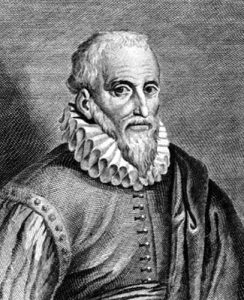
In October 1560, King Francis II of France established himself there with his court in order to demonstrate his opposition to Jérôme Groslot, a fervent supporter of the Reformation. Francis II died at the Hôtel Groslot on 5 December 1560 in the presence of his surgeon Ambroise Paré. Charles IX of France, then ten years old, succeeded him following the Estates General held in 1560 before the Hôtel Groslot in a hall specially erected for the occasion.
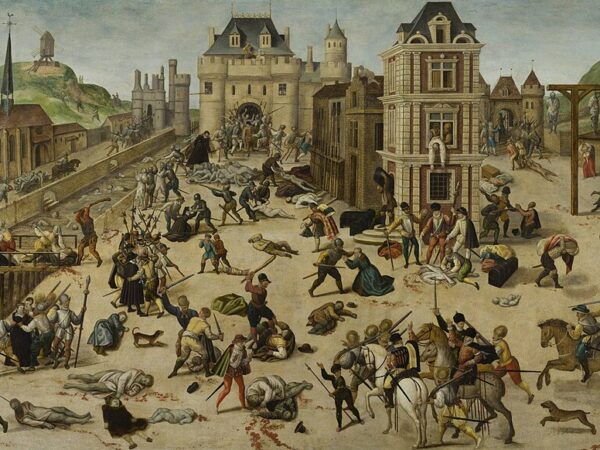
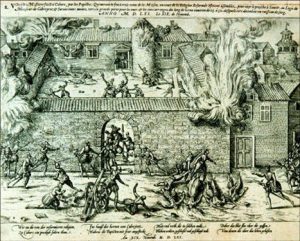
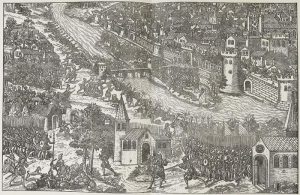
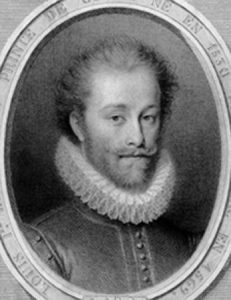
When the regent Catherine de Medici and the court left Orléans, Jérôme Groslot, son of Jacques who had served as bailiff of Orléans from 1545 onwards, resumed possession of the hôtel. The residence later welcomed Louis I de Bourbon, Prince de Condé, who returned to Orléans on 2 April 1562 and made the house the headquarters of the Protestant cause. Charles IX returned to Orléans after the St. Bartholomew’s Day massacre in an effort to calm tensions and again stayed at the hôtel.
Later inhabited by the governors of Orléans, the Hôtel Groslot became the town hall in 1790.
The Hôtel Groslot consists of four principal rooms: the ceremonial salon, the former council chamber, the former mayor’s office, and the wedding hall. It contains relics associated with Joan of Arc, paintings, Aubusson tapestries, wooden chests, and period furniture. The interior decoration, in the troubadour Gothic style, features coffered ceilings and moulded panelling created between 1850 and 1854 under the direction of the architect André Delton, who enlarged the original building by adding two wings in the same style.
At the foot of the central staircase stands a bronze statue of Joan of Arc in prayer, the work of Princess Marie of Orléans, daughter of King Louis-Philippe I.