The Stained Glass Window of the Reformed Church of Dreux: A Symbolic Interpretation
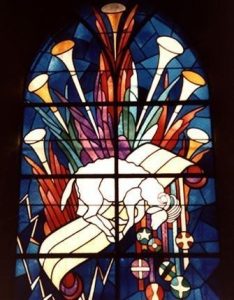
Inside the Reformed Church of Dreux, one stained glass window stands out for the variety of its motifs and the richness of its symbolism. It offers a visual representation of several aspects of the Protestant tradition, connected to faith, history, and biblical texts.
A Structured and Symbolic Composition
The window is divided into several panels, each illustrating a specific theme, often inspired by the Bible or historical events. Color is used deliberately to evoke notions such as light, faith, or spiritual freedom. Figures and symbols characteristic of the Christian tradition appear throughout, including human characters, books, the Huguenot cross, and a dove. The entire composition is designed to harmonize with the architecture of the building, taking into account natural light and the visitor’s visual journey.
A Medium for Reflection
This stained glass window serves as a support for both personal and collective reflection. It provides an accessible artistic entry point into key aspects of Protestant faith. It also bears witness to local history and to the role of religious art in conveying beliefs and spiritual landmarks. Finally, it encourages viewers to take a closer look at elements of religious heritage as tools for understanding, remembrance, and transmission.
A video produced by l’Église protestante unie de Dreux.
Associated notes

The Huguenot cross

Lieux de mémoire dans le Centre