A Place at the Heart of the Community
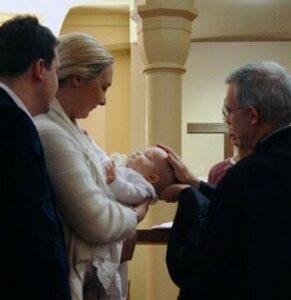
Whether baptism is administered to a child or to an adult, this sacrament is generally celebrated during Sunday worship, in the presence of the parish community. Consequently, baptism usually takes place within the chancel, visible to the entire congregation and close to the communion table.
This constitutes a fundamental difference from Catholic places of worship, where the baptismal fonts are traditionally situated in a chapel near the entrance in order to expel demons before one proceeds further into the church.
Baptismal Fonts
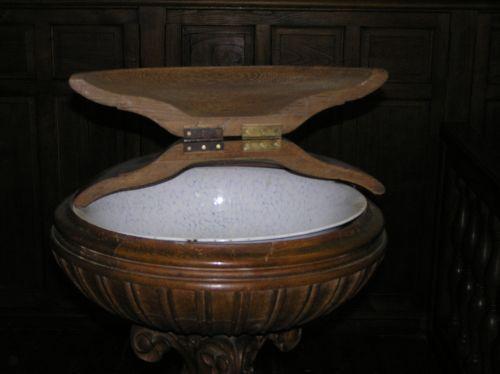
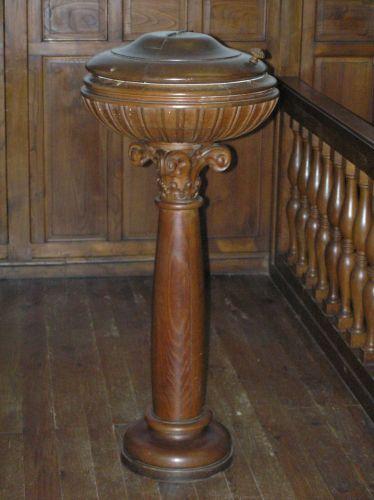
Baptismal fonts are primarily intended for the baptism of children. They generally consist of a bowl made of metal, glass, or earthenware, placed or fixed upon a support of stone, wood, or metal. Unlike Catholic baptismal fonts, they possess no drainage opening in the floor, the water, not being blessed, being disposed of without any special precaution.
Their use is by no means indispensable, yet they are present in most Lutheran churches, in continuity with medieval practice, though with a change of location in comparison with Catholic custom: they moved from a chapel near the entrance to the chancel itself. They are sometimes also situated within a specific designated space (Paris, Temple du Bon-Secours). In such cases, they may be made of stone (Nouvel-Avricourt, Moselle) or of wood.
Their ornamentation most often reflects the architectural vocabulary of the building itself. It may also evoke the symbolism of baptism: the dove of the Holy Spirit, the fish, or the Greek term Ichthus (formed from the initials of the Greek words meaning “Jesus Christ, Son of God, Saviour”).
In German-speaking Switzerland, within churches of the Reformed tradition, the baptismal fonts may stand at the centre of the chancel where, covered by a wooden top, they are transformed into a communion table.
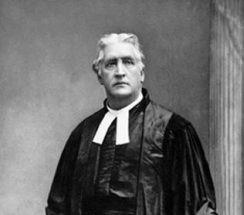
The use of baptismal fonts spread throughout France during the second half of the nineteenth century under the influence of the theological reflections of Pastor Eugène Bersier (1831–1889) and of Alsatians who settled in Paris. They are most frequently made of wood and metal (Paris, the churches of Pentemont and Saint-Esprit) and sometimes reproduce the same decorative elements as the communion table (Paris, Oratoire du Louvre).
Ewers and Basins
Used for baptisms by pouring or sprinkling, baptismal sets consist of a ewer and a basin or presentation dish which differ little, if at all, from secular vessels or from those employed in the Catholic rite for ablutions.
Made of silver, silver-plated metal, pewter, other metals, glass, or ceramics, they only rarely display specific decoration. Such decoration may include the inscription of a biblical verse (Nilvange, Moselle), a cross, a fish, or the dove of the Holy Spirit, or, more exceptionally, a representation of the Baptism of Christ (Wissembourg).
They may be used alongside baptismal fonts or independently.
Any other type of vessel, such as a cup, bowl, or even a tortoise shell (Mialet, Musée du Désert, originating from a mission in Madagascar), may also have been or may still be used.
Other Objects Associated with Baptism
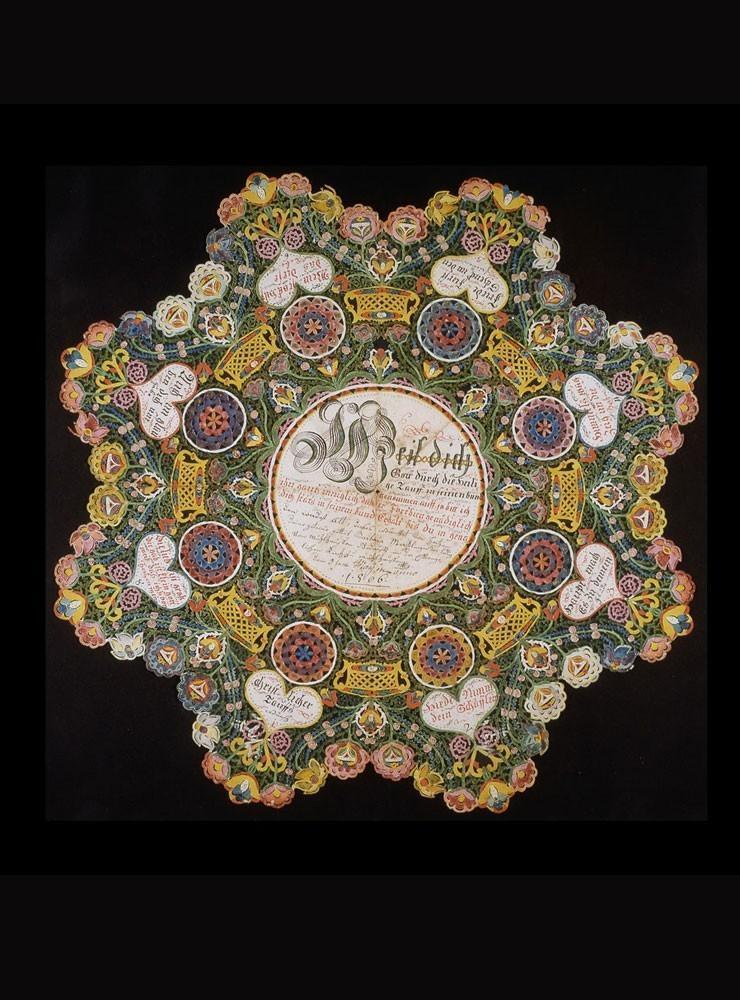
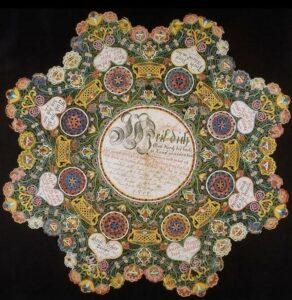
Within the Lutheran tradition, baptismal letters are common. Given by the godfather or godmother, they bear witness to his or her commitment. Most frequently, they consist of painted or printed images, more rarely of reverse-painted glass (Musée alsacien) or intricate paper cuttings.
The image most commonly depicts a baptismal scene. A baptismal shield or coin is often associated with this letter, preserved wrapped within the letter itself and placed in a fabric pouch or, at times, within a special metal box bearing an inscription or decoration related to baptism.
In the same spirit, confirmation images are given by the pastor, generally accompanied by a handwritten text including an exhortation and a biblical verse.
Baptismal Pools
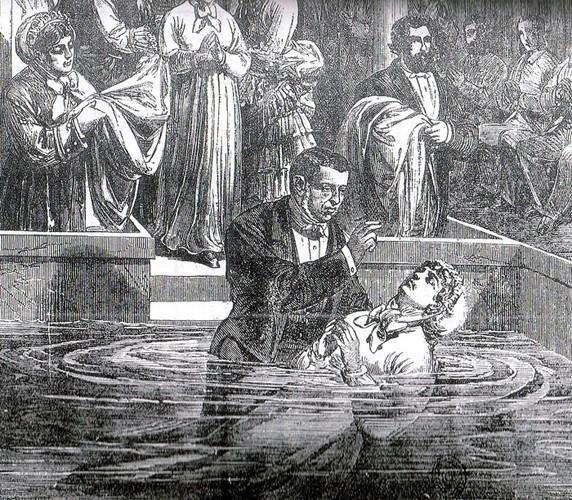
The baptismal pool has been attested since at least the middle of the nineteenth century within Baptist churches and subsequently developed in Evangelical churches: these communities generally practice adult baptism by immersion.
The baptismal pool, rectangular or circular in plan and built in masonry or tiled, is sunk into the floor, either within the chancel or behind the pulpit. In certain cases, a second basin exists which remains empty for the pastor. A removable wooden platform may cover the pool outside baptismal ceremonies (Paris, church in Rue du Maine).
The baptismal pool may also take the form of a bathtub or even a coffin (Toulouse), thus symbolically evoking the death of the individual renewed through baptism.
When baptism takes place outdoors, it may be celebrated in a river or in the sea, or more simply in an inflatable swimming pool.