The Louvre

At the Louvre, he had the Petite Galerie built, intended as the future apartment of Marie de’ Medici, quadrupled the Cour Carrée, and, above all, commissioned from Métezeau and Jacques II Androuet du Cerceau the Grande Galerie, or Galerie du bord de l’eau, some 450 meters in length, linking the old Louvre to the Tuileries Palace built by Catherine de’ Medici.
Place Dauphine, the Statue of Henry IV and the Pont Neuf (Paris)

Place Dauphine, facing the Pont Neuf (the first bridge in Paris to be constructed without houses along its sides), was named in honour of the Dauphin and built from 1607 onwards. The present statue of Henry IV, dating from 1818, replaced an equestrian statue commissioned by Marie de’ Medici from the Italian sculptor Jean de Bologna in 1614.
The Place Royale in 1612
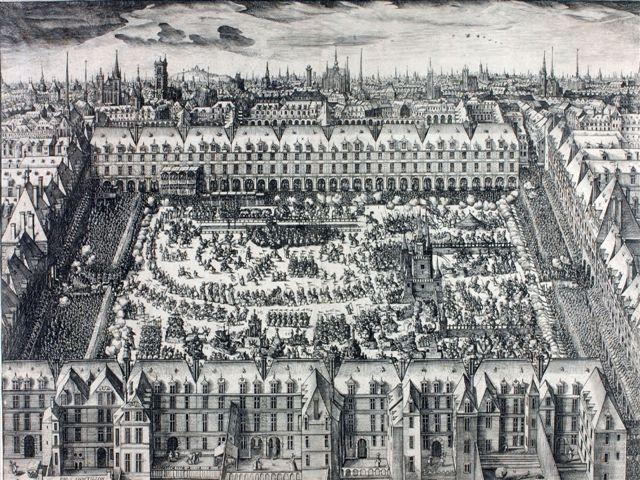
The construction of the Place Royale (now the Place des Vosges) was decided in 1605. This vast square, measuring approximately 135 to 140 meters on each side, was to be lined with uniform façades. The private owners of the houses were required to pay a fee to the royal treasury. The sandy central space, was intended for equestrian games.
The Château of Fontainebleau
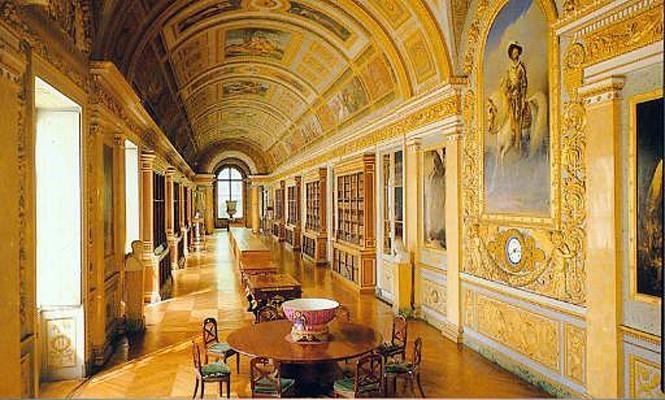
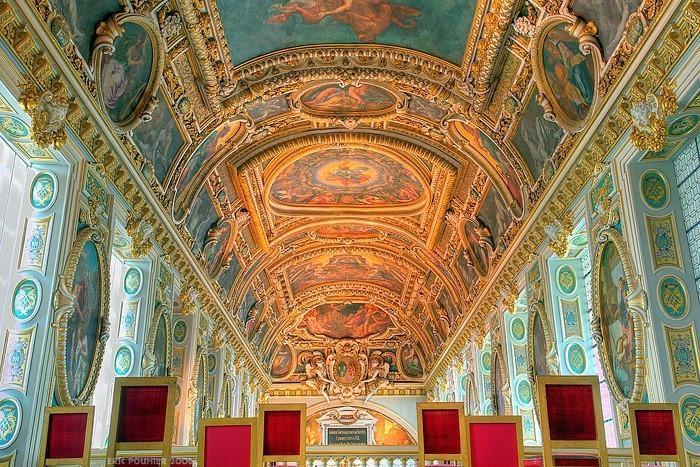
The Château of Fontainebleau became one of Henry IV’s favoured residences. He ordered extensive works there, including the Galerie des Cerfs, the Galerie de Diane, and the Chapel of the Trinity, as well as significant interior decorations and improvements to the gardens.
The Old Château of Saint-Germain-en-Laye

The Château of Saint-Germain-en-Laye had served as a royal residence since the twelfth century and was particularly valued for its proximity to hunting grounds. Henry IV enlarged the “Old Château”, which became the “nursery” of his numerous offspring, while he resided in the “New Château”, whose plans were drawn up by Philibert de l’Orme. He also had magnificent gardens laid out.
Henrichemont
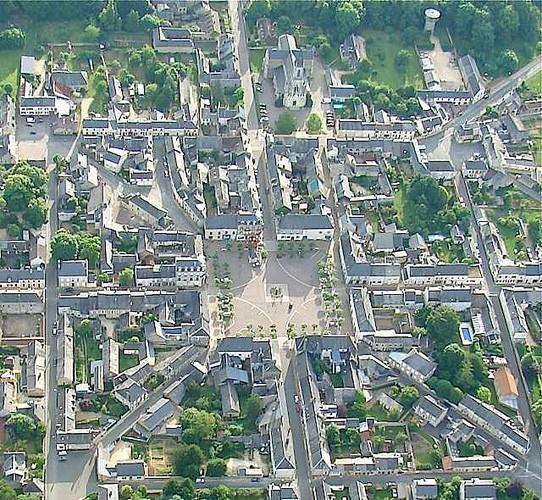
To honour the King, Sully commissioned in 1608 the construction of a new town bearing the royal name, Henrici-Mons, later known as Henrichemont. He asked Salomon de Brosse, the leading Protestant architect, to design the central square, which was inspired by the Place Royale in Paris. A Protestant temple was also planned.