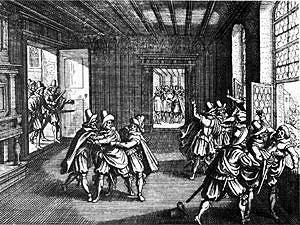
The First War of Kappel (1529)

This was the first of the Wars of Religion in Europe.
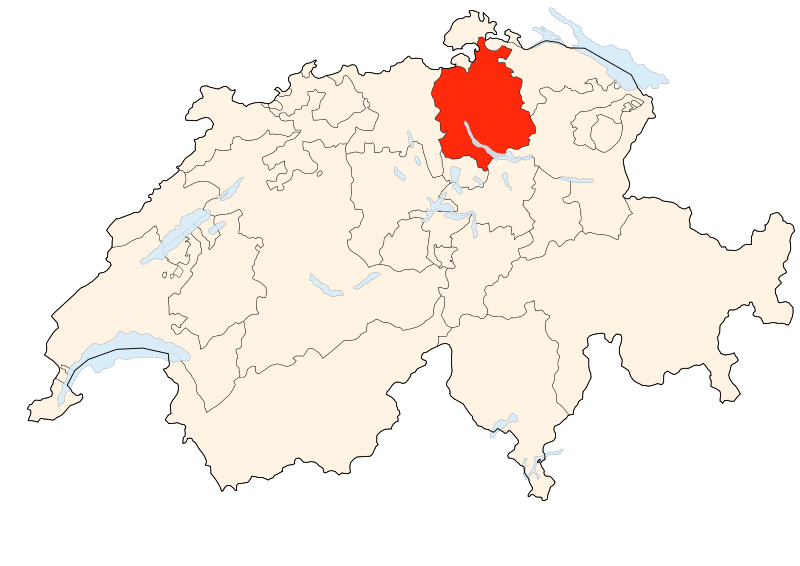
In Switzerland, the Reformation first took hold in the Canton of Zurich in 1523 under the influence of Ulrich Zwingli, before spreading to Canton of Bern and Canton of Basel. The Reformation was also established in Geneva, although Geneva remained independent and did not join Switzerland until 1815.
At the beginning of the sixteenth century, following the Reformation, the sovereignty of the cantons in religious matters was scarcely disputed. Nevertheless, one source of conflict remained: the choice of confession, Catholic or Protestant, within the common bailiwicks, territories jointly subject to several cantons and administered in turn by each of them.
In 1529, following the execution by burning of Pastor Kaiser at Schwyz, the Canton of Zurich declared war on the five Catholic cantons of Lucerne, Uri, Schwyz, Unterwalden, and Zug, united within the Christian Alliance. The two armies met at Kappel am Albis, near the border with the Canton of Zug. Mediation succeeded in preventing a battle.
The First Peace of Kappel favoured the Protestant side: it provided that the Reformation might spread within the common bailiwicks and that the Catholic cantons would renounce their alliance with Ferdinand I of Habsburg. Zwingli, however, failed to compel the Catholic cantons to permit Protestant worship or to abandon one of their principal sources of income: the hiring out of mercenary troops abroad.
The Second War of Kappel (1531)
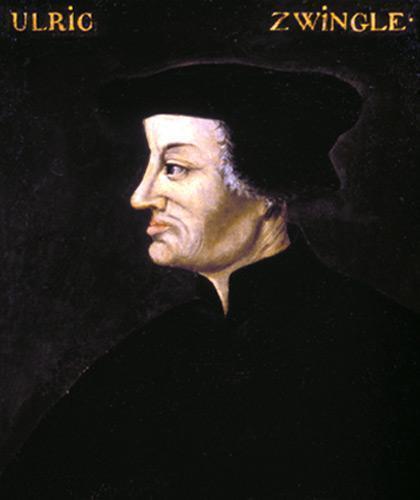
After the peace settlement, the Zurich authorities continued to fear military intervention by Ferdinand I. Zwingli strove unsuccessfully to forge an alliance with the German Protestants and to secure the acceptance of Protestant worship in the Catholic cantons. He also attempted to draw the Canton of Bern into a war against the five Catholic cantons, but succeeded only in obtaining a joint grain blockade.
In October 1531, the five cantons, suffering from the embargo, declared war.
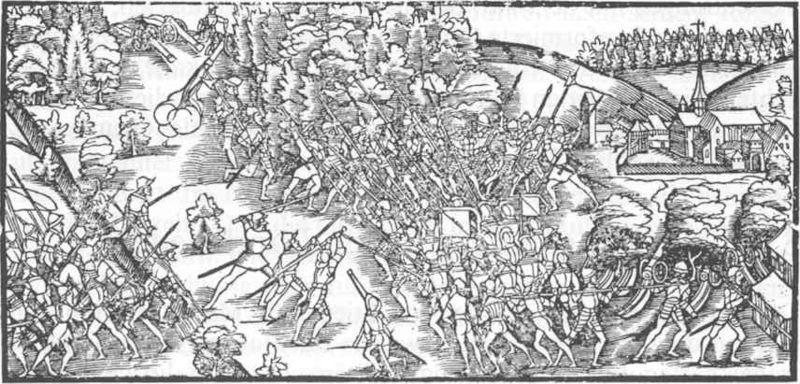
The engagement took place near Kappel. The Zurich troops, poorly prepared, badly commanded, and numerically inferior, were routed. During the battle, Zwingli, serving as military chaplain, was killed.
At the end of October, in a second engagement at the Battle of Gubel in the Canton of Zug, the Protestant army of Bern and Zurich, though considerably superior in numbers, was defeated during a night attack.
The Second Peace of Kappel brought an end to the expansion of the Reformation in Switzerland. It favoured the Catholics within the common bailiwicks, while preserving the religious status quo within the cantons themselves.
The First War of Villmergen (1656)
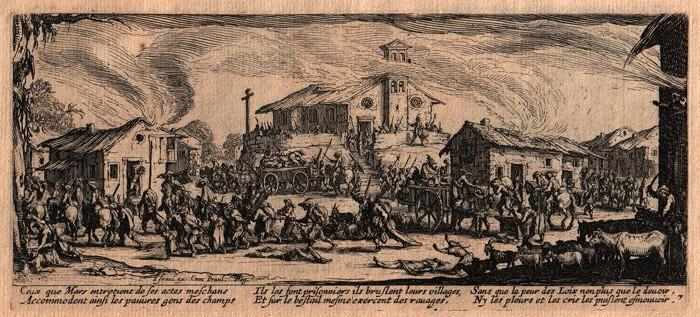
After the Second Peace of Kappel, political tensions persisted between the Protestant and Catholic cantons, though without armed conflict.
During the Thirty Years’ War, Switzerland remained neutral.
However, in 1652, following the devaluation of the currency in several cantons, provoking an armed rural uprising known as the Swiss Peasants’ War, a proposal for a federal pact drawn up in Bern was rejected by the five Catholic cantons of Lucerne, Uri, Schwyz, Unterwalden, and Zug.
At the end of 1655, Protestants from Arth in the Canton of Schwyz sought refuge in Zurich. Tensions escalated until four Protestants who had remained in Schwyz were executed.
The cantons of Zurich and Bern then attempted by force to impose the pact, which would have undermined the Second Peace of Kappel.
At the beginning of 1656, war broke out between the cantons of Zurich and Bern and the five Catholic cantons. The Catholic troops achieved a victory near Villmergen in the present-day Canton of Aargau by launching a surprise attack on the Bernese troops, which had failed to join forces with those of Zurich.
Peace negotiations resulted in a compromise confirming the provisions of the Second Peace of Kappel, particularly the cantons’ authority in confessional matters.
The Second War of Villmergen (1712)

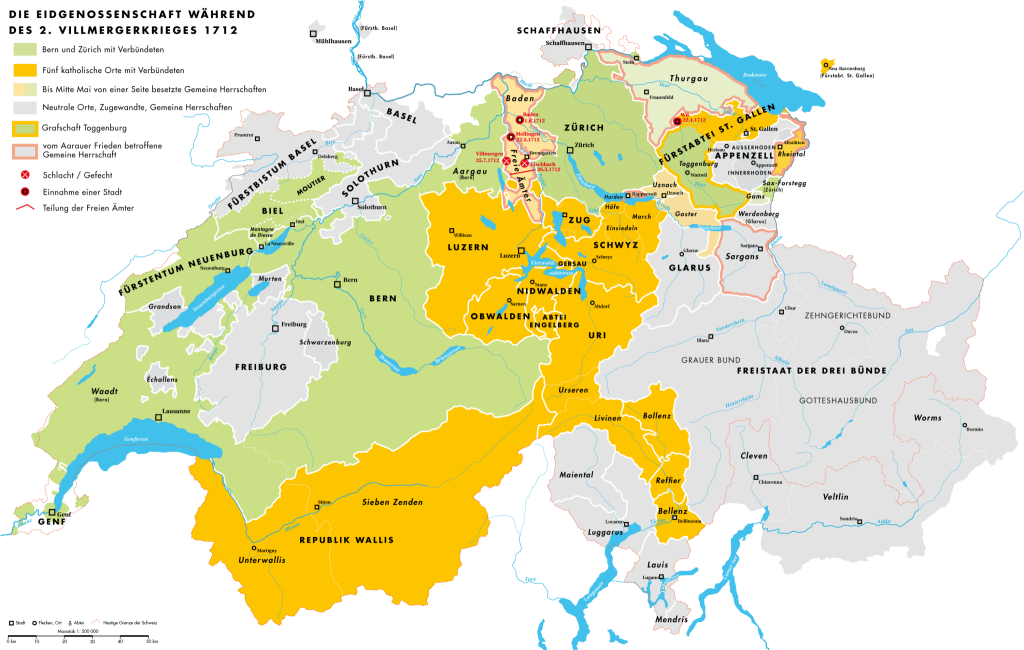
The Second War of Villmergen opposed the Protestant cantons of Zurich and Bern, and their allies Geneva and Neuchâtel, against the Catholic cantons of Lucerne, Uri, Schwyz, Unterwalden, and Zug, as well as the Valais and the Principality of Saint-Gall.
The hostilities originated partly in a long-standing conflict between the Prince-Abbot of Saint-Gall and his Protestant subjects in Toggenburg, and partly of the desire of the Protestant cantons to end the Catholic majority within the Federal Diet, the assembly of cantonal deputies.
The Protestant troops won a victory near Bremgarten in the Canton of Aargau. Peace was signed at Aarau, but it was repudiated within the Catholic cantons.
War resumed: the Protestants achieved a decisive victory near Villmergen and invaded several Catholic cantons. The conflict claimed approximately 3,000 lives.
Peace negotiations resumed at Aarau. The Catholics lost their majority within the Diet. Freedom of religion was established in the common bailiwicks, and a joint commission was created to arbitrate confessional disputes.
The Sonderbund War (1847)
The Sonderbund War was a war of secession, political in origin but marked by religious divisions, differing from the earlier religious wars, which had been chiefly led by Zurich with the aim of extending the Reformation.
Following the Helvetic Republic, dominated by France, the Congress of Vienna proclaimed the independence and neutrality of Switzerland in 1815, while the Republic of Geneva became a Swiss canton.
Yet religious divisions still threatened the existence of the Confederation. In 1844 and 1845, Protestant irregulars opposed the Catholic Canton of Lucerne to invite Jesuits for higher education and attempted to overthrow the cantonal government.
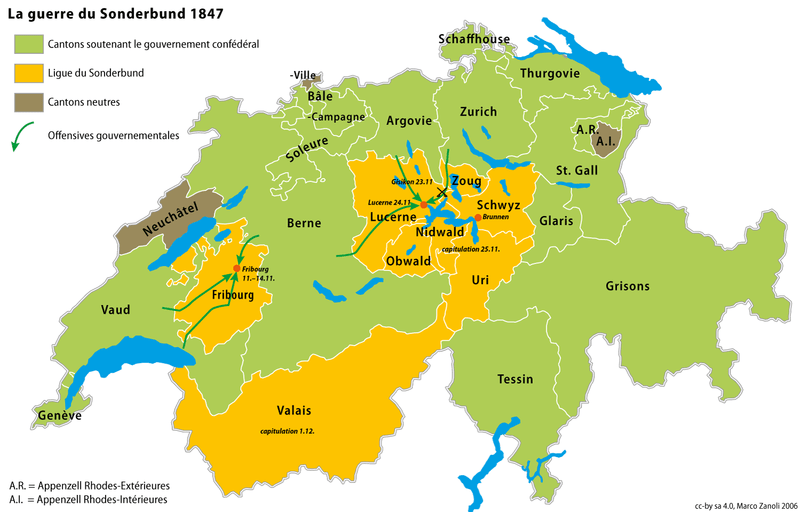
In 1846, in response to these disturbances, the five Catholic cantons of Lucerne, Uri, Schwyz, Unterwalden, and Zug, joined by Canton of Fribourg and the Valais, all seeking to preserve their cantonal autonomy, formed a separatist and defensive league: the Sonderbund.
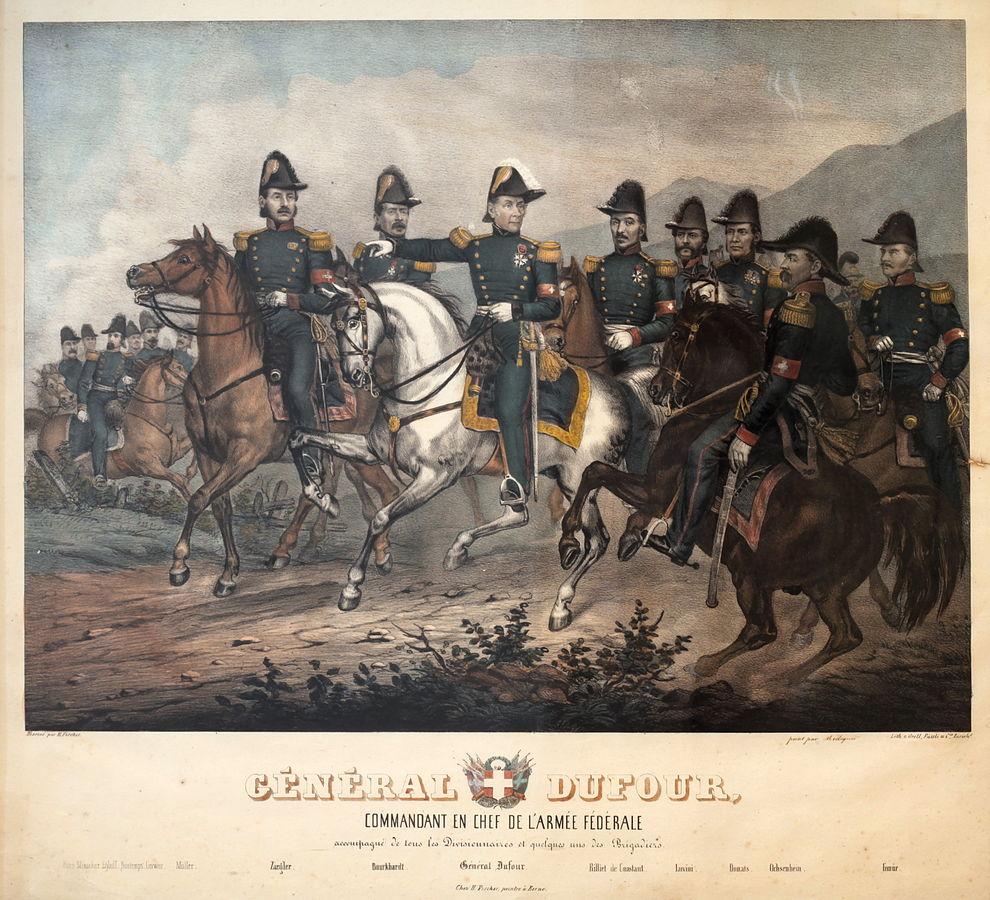
In 1847, the Federal Diet meeting in Bern voted to dissolve the Sonderbund by force. The Genevan Guillaume Henri Dufour was appointed General and placed in command of the federal forces.
With an army of 100,000 men, General Dufour conducted a rapid campaign designed to prevent intervention by foreign powers in support of the Sonderbund. He first attacked Fribourg, which capitulated, and then Lucerne, which he invaded. The Valais in turn submitted without resistance.
Extremely brief, lasting only twenty-five days, the war caused around one hundred deaths. The moderation and diplomacy of General Dufour made it possible to preserve the cohesion of the Confederation.
Following the Sonderbund War, the Jesuits were banned in Switzerland, but the Federal Constitution of 1848 represented a compromise leaving the cantons their authority in educational and ecclesiastical matters.
According to the Historical Dictionary of Switzerland.