The Waldensian Movement

Nevertheless, the followers of the Lyonnais Pierre Valdo, the Waldensians, succeeded in establishing themselves in Provence from the close of the twelfth century. They settled in successive waves along the principal routes of communication, with the height of this immigration occurring at the end of the fifteenth and the beginning of the sixteenth centuries.
Two centuries before the Reformation, the Waldensians were present to the north of the Durance, in the limestone massif of the Luberon, in the towns of Mérindol, Cabrières, and their surroundings.
In 1530, these dissenters made contact with the Reformers of Switzerland and Strasbourg, Œcolampadius, Bucer, and Farel, who had been born near Gap.
In 1532, at the Synod of Chanforan, the Waldensians adhered to the Reformation.
In 1540, the Parlement of Aix-en-Provence condemned seventeen fugitive “heretics” to the stake, but Francis I suspended the sentence.
The Reformation Suppressed
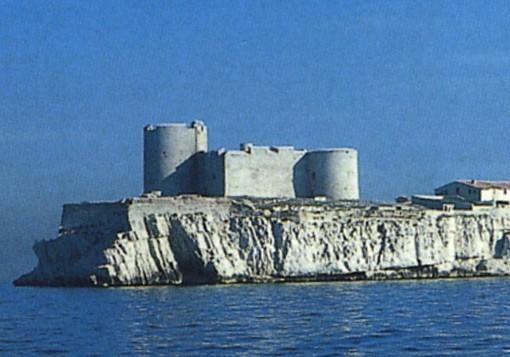
In 1545, the President of the Parlement of Aix-en-Provence, Jean Maynier d’Oppède, supported by the bishops, organised a punitive expedition. Twenty-two villages, including Peypin-d’Aigues, Lourmarin, Cabrières, and Mérindol, were plundered and burned. Hundreds of inhabitants were massacred, sent to the galleys, or imprisoned in the Château d’If at Marseille. Others fled to the mountains or to Switzerland.
At the summit of old Mérindol, a Waldensian memorial has been erected. At Oppède-le-Vieux, the ruins of the village of the President of the Parlement of Provence, Maynier d’Oppède, executioner of the Waldensians, still remain.
The repression was severe, and the establishment of the Reformation in Provence was rendered all the more difficult, as the scale of the violence inflicted upon the Waldensians could only deter further adherence.
Marseille
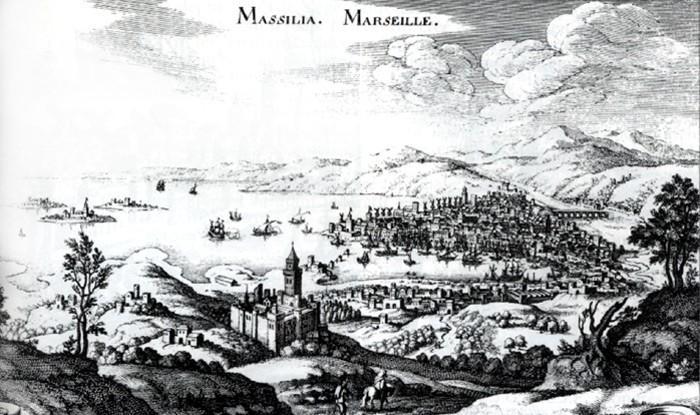
Nevertheless, the Reformation reached Marseille and Aix: as early as 1540 and again in 1560, some sixty Reformed communities, or “established churches,” were recorded.
At Apt, the bishop converted; at Aix-en-Provence, the archbishop Jean de Saint-Priest de Saint-Chamond likewise did so in 1561.
At Draguignan (1558) and Aix-en-Provence (1560), two “heretics” were burned.
At Castellane, the visit of a minister from Geneva provoked a cycle of violence led by two young nobles converted to the Reformation, the Mauvans brothers, one of whom was assassinated, while the other assumed leadership of an armed insurrection.
Orange

In 1560, repression fell upon Orange; following the massacre of Protestants there, the Baron des Adrets carried out terrible reprisals at the head of Huguenot bands.
Sisteron, in 1562 and 1567, endured two epic sieges. In 1592, the Huguenot Lesdiguières suffered defeat during his siege of the town, which commemorates the event each year at Easter.
In Haute-Provence, at Forcalquier, there remains at 12 Rue du Palais a house which served as a temple around 1560. Above the door is an inscription: “Confess the Lord and call upon His name” (Isaiah 12).
At Les Baux-de-Provence, on the house of the Protestant Nicolas Peyre, there appears above the door the inscription: “Post Tenebras Lux – 1571.”
At Manosque, one may see a farm known as the “Ferme du Prêche,” in the “Prêche,” neighbourhood where there also stood a temple built in 1663 and demolished in 1685.
At Marseille, in the sixteenth century, both the ruling classes and the populace united against the propagators of “Lutheran heresy.” During the Waldensian repression and the massacres at Mérindol and Cabrières, 600 surviving Waldensians were brought to Marseille and distributed between the galleys and the Château d’If; 200 of them perished.
The Edict of Nantes permitted the establishment of a Protestant church at Velaux at the beginning of the seventeenth century; the present Catholic church is said to have been the former temple.
In 1685, the Revocation of the Edict of Nantes struck a Provençal Protestantism already exhausted. Nevertheless, the dragonnades attacked the Luberon, Les Baux, Sénas, and Marseille. In this city, the memory of the sufferings of prisoners and galley slaves is preserved:
- at the Arsenal (Cours d’Estienne d’Orves), hospital for convicts and invalids;
- at the forts of Saint-Nicolas and Saint-Jean, and at the Château d’If, where galley slaves and deportees awaited departure for Martinique or Saint-Domingue.
In the eighteenth century, assemblies of the Desert appeared in Provence only from 1735 onwards, with the preacher François Roux, and in 1744 with the minister Deferre.
At Marseille, thanks to foreign merchants and a small Swiss colony, sermons were held in the residences of English and Dutch consuls.
After 1745, through the efforts of Paul Rabaut and his son Rabaut-Pommier, the local church was once again able to have ministers. A country house near La Belle-de-Mai served as a place of worship, and after 1780 the oratory was transferred to 5 Chemin de Malaval. In 1788, Marseille counted some 2,000 Protestants. After the Revolution, the Reformed Church was established in a former Academy of Music in Rue Scevola (present-day 10 Rue Ventura), and later, under the Restoration, the temple of Rue Grignan was constructed on the site of the former Hôtel Payen.
For information on the temples of each region, please refer to the specialised site: http://temples.free.fr/