Saint-Jean-du-Gard
Formerly called Saint-Jean-de-Gardonnenque, Saint-Jean-du-Gard adopted the Reformation as early as 1551 and became the capital of the Cévennes Reformed Churches. Two years before the Revocation, the temple was destroyed and its stones were used to build the new Catholic church intended for converts.
Several Désert preachers were born here: Jean Roques, hanged in Nîmes in 1687; Jean Mazel, hanged in Montpellier in 1690; Étienne Gout, martyred on the spot in 1702.
Mialet
From 1560 onwards, a gathering of pastors met in the Aigladines caves.
In the hamlet of Mas-Soubeyran, the Camisard leader Pierre Laporte, known as Rolland, was born in 1680. Today, the Musée du Désert is located there. On the door of the Mialet temple, a plaque commemorates the terrible deportation of 1703: 670 inhabitants were deported to Perpignan.
Alès

Since 1560, a Reformed Church has existed in Alès or Alais, an important Protestant stronghold. The peace granted to Protestants in 1629, after the defeat of the Protestant army under Rohan, takes its name from the town. The fort served as a prison for those who refused to convert to Catholicism.
Jean Cavalier, a famous Camisard leader, was born in Ribaute-les-Tavernes. Not far away, the Billot Tower preserves the memory of the Camisards killed by royal troops on 21 April 170 . on the 21st of April 1703
Cardet has preserved its 17th-century temple.
Castelnau Castle, 1 km north of Moussac, served as a refuge for Rolland and his brother-in-law Maillet. Betrayed, they were discovered and captured on the 14th of August 1704.
Euzet and its caves served as hiding places for the Camisards, who were discovered there in April 1704. As a result, the dragoons massacred the inhabitants.
Anduze
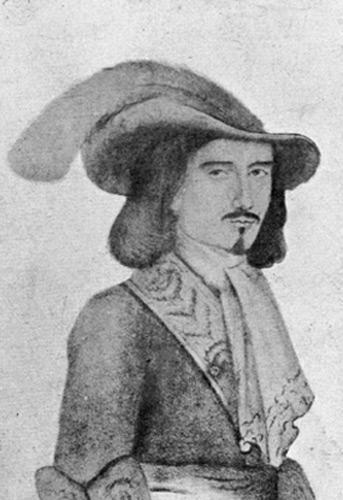
It had its first pastor in 1557. In the 17th century, the Duke of Rohan made it a stronghold. Jean Cavalier worked there as a baker’s assistant in Gaussorgues Street. At that time, the heads of Camisards killed by royal troops were displayed on the old Gardon bridge to terrify the population.
In Saint-Félix-de-Pallières, Rolland had a fortified encampment, the Combe de Rolland, where he met an emissary of the Queen of England in 1703.
Tornac was the site, in December 1703, of a Camisard victory over the royal troops.
In Durfort, the hamlet of Montèzes hosted the first Désert synod, convened in 1715 by Antoine Court.
Saint-Hippolyte-du-Fort
In 1683, the population was 98% Protestant, but the temple was demolished by court order. After the Revocation, the fort was used as a prison for Protestants guilty of attending Désert assemblies. During the persecutions, the king’s dragoons were lodged at the “Plan”, now the Dugas Foundation (whose library includes a collection of the Society for the History of French Protestantism). A very large Protestant temple has since been rebuilt.
Le Vigan
In the 17th century, this small town was almost entirely Protestant.
Saint-André-de-Majencoules and the Col de Mouzoules are memorial sites of Désert assemblies banned in 1704 and 1742.
Between Saint-Hippolyte and Le Vigan, Ganges — 60% Protestant — was twice taken by Rolland’s Camisards.