The Kingdom of Denmark and Norway
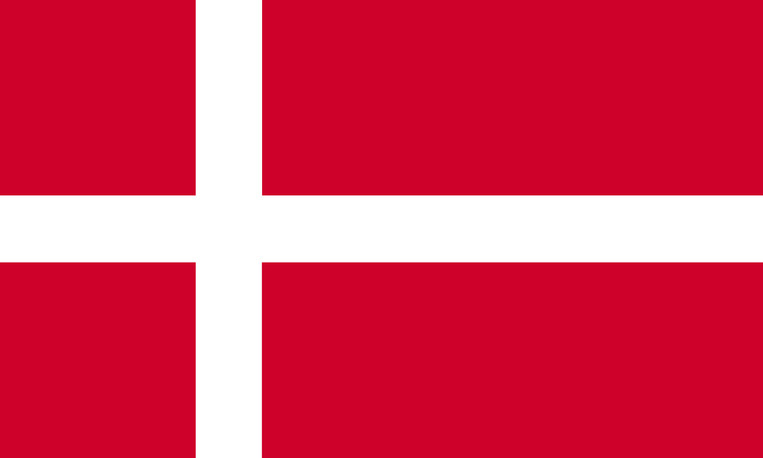
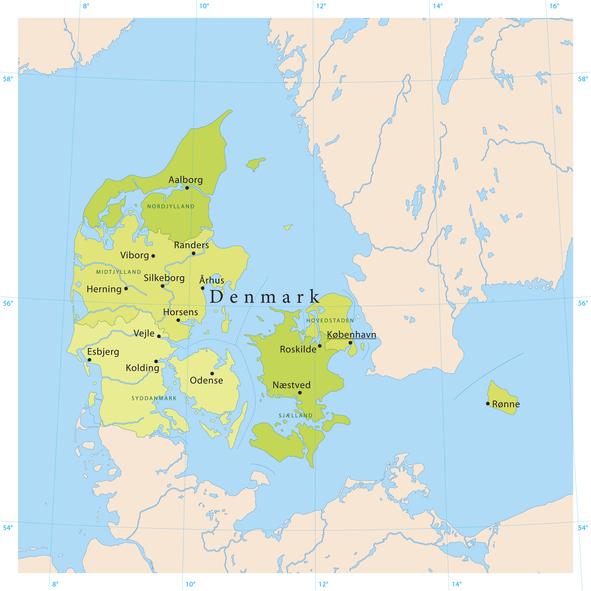
Norway remained under Danish rule from 1450 until the Treaty of Vienna in 1814.
In 1536, the kingdom adopted Lutheranism.
During the eighteenth century, it became one of the great maritime powers of the world. In addition to trade through the Baltic Sea, the Danish fleet sailed the southern seas and established colonies in Ghana, the West Indies, and India. Thus, the kingdom, which remained neutral, prospered through colonial trade.
The Refuge at the End of the Seventeenth Century

Despite the hostility of Lutheran bishops, who regarded the Reformed as more dangerous than Catholics, since the Reformed Churches could not claim apostolic succession and the authority attached to it, hundreds of French refugees arrived in Denmark and settled there permanently. They were attracted by the policy of King Christian V who, between January and April 1685 (that is, shortly before the Revocation of the Edict of Nantes), promised letters granting fiscal privileges. Moreover, his wife, Queen Charlotte Amalie of Hesse-Kassel, belonging to the princely House of Hesse-Kassel, was of the Reformed faith.
She had a church built in Copenhagen, inaugurated in 1689 and initially intended for her Household. The Queen also opened it to French refugees. She organised two Reformed consistories, one German and one French, had two parsonages constructed, and established the rules governing communal life. The church was rebuilt after the fire of 1728. Even today, the Reformed Church of Copenhagen continues to function in accordance with the Queen’s wishes.
There exist few studies concerning the Refuge established in Denmark. Nevertheless, marriage and baptismal registers contain invaluable information regarding the refugees’ regions of origin and professions.
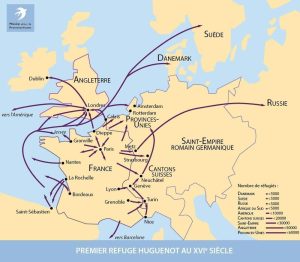
To reach Denmark, the refugees travelled either by sea, the route chiefly taken by those leaving Guyenne, Poitou, Charente, Normandy, and other regions, or by land, making their way to Switzerland and thence to the German principalities. Whatever route was chosen, Denmark was rarely the refugees’ first destination. They often resided in another country before settling in Copenhagen, where the Court was located.
As for their professions, apart from officers integrated into the Danish army and navy, it was principally the luxury, fashion, and the culinary professions that flourished. The most widely represented profession was that of wigmaker: the names of approximately twenty-five have been identified.
The Economic Emigration of the Huguenots in the Eighteenth Century
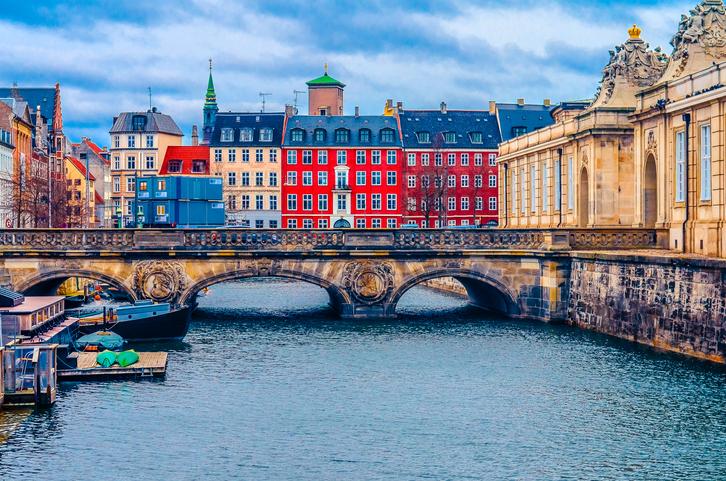
As in other countries of Northern Europe, the settlement of the Huguenots in the Kingdom of Denmark took place under favourable conditions. Their prosperity was genuine. This encouraged descendants of Huguenots, already established in Switzerland and the Netherlands, to join those already living in Denmark. They contributed significantly to the country’s economic development.
The successful assimilation of these immigrants continued to strengthen over time, forging ties, still important today, between France and Denmark.
The region of Fredericia in Jutland which, from the 1720s onwards, became a new centre of Huguenot settlement in Denmark is a good exemple. These settlers were farmers who introduced new methods of cultivation (crop rotation) and animal husbandry, as well as new crops (tobacco, turnips, potatoes, flax, rapeseed, artichokes, and others). The church at Fredericia was built in 1735. Services were conducted in French until the beginning of the nineteenth century, and thereafter in Danish.
According to Gabrielle Cadier