The SEIPP and the Protestants
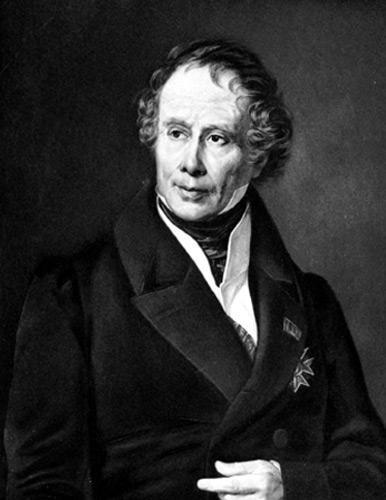
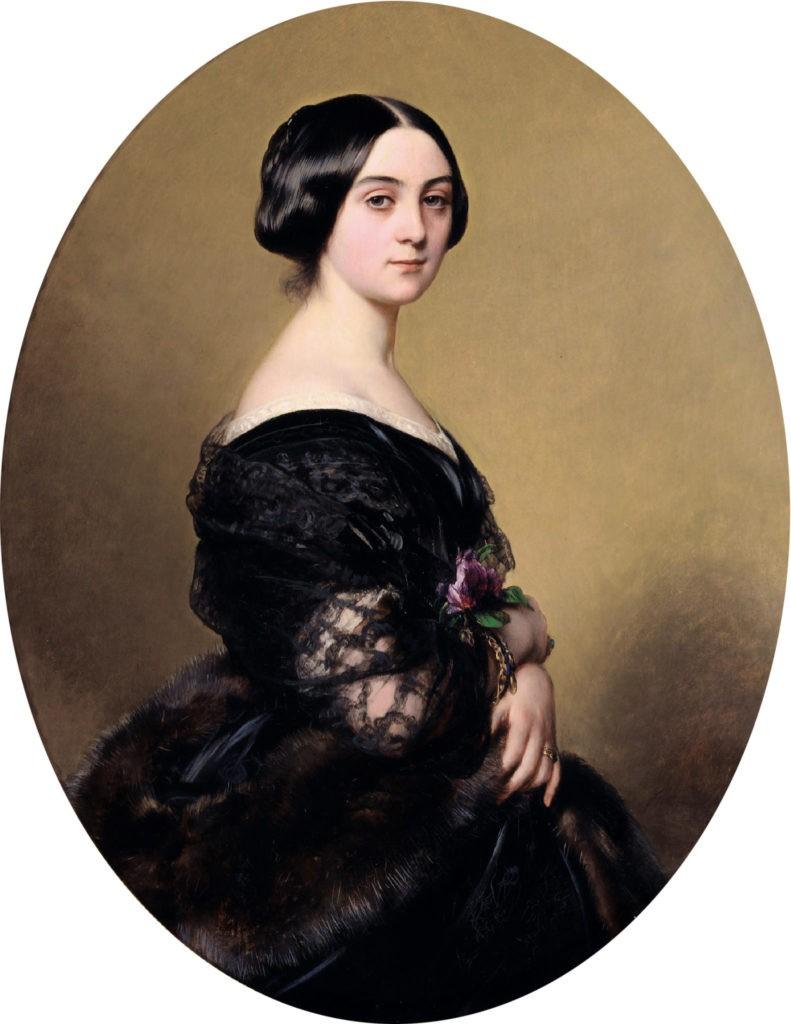
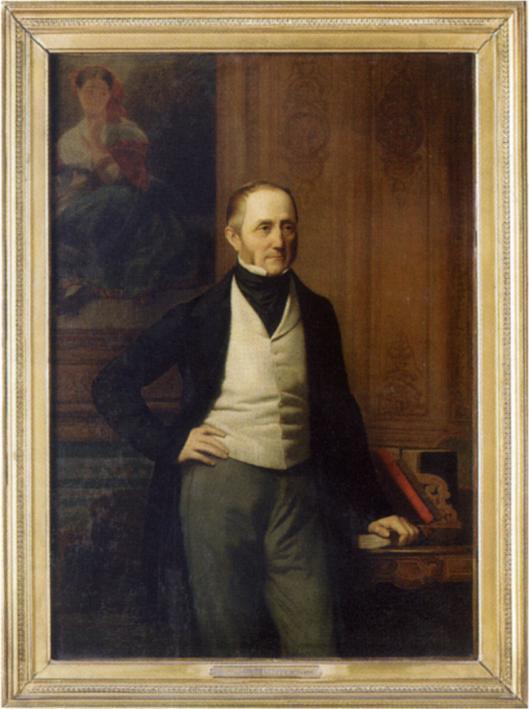
From the time of their settlement at the Château du Piple in Boissy-Saint-Léger in the Val-de-Marne, Jean-Henri Hottinguer and his wife took part in the project of the SEIPP, the Société pour l’encouragement de l’instruction primaire parmi les protestants de France (“Society for the Encouragement of Primary Education among the Protestants of France”), an association founded in 1829 by François de Jaucourt in support of the development of Protestant schools and the training of Protestant schoolmasters.
At that time, there already existed in Courbevoie a Protestant teacher training college for male teachers directed by Pastor Gauthey, but there was no equivalent institution for the training of female teachers. Owing to the insufficient number of Protestant girls’ schools, young Protestant girls were obliged to attend Catholic schools or municipal schools, where only Catholic catechism was taught.
In 1854, Jean-Henri Hottinguer, who had become Vice-President of the SEIPP, offered to donate land and a residence, financing it upkeep and conversion into a teacher training college for women. This institution also included a boarding school for young girls.
The donation, announced on 5 January 1854, was formally executed before a notary on 9 March 1857, and the State authorised the President of the SEIPP to accept it in July 1857.
Journal des débats politiques et littéraires, 1 May 1854 (extract)
“A Teacher Training College for the training of female teachers has this year been founded through the generous and enlightened charity of one of our brethren. We had all long felt both the need and the desire for such an institution; M. Henri Hottinguer has provided for it at a single stroke. He has offered and donated to the SEIPP, first, an excellent house with a large garden situated at Boissy-Saint-Léger near Paris, admirably suited for the establishment of a training college, and furthermore he has endowed this house with an annual and perpetual income of 5,200 francs, thereby ensuring its future for ever. (…) The Protestants of France will thus owe to M. Hottinguer a constantly renewed pool of female teachers capable of bringing up their daughters in a Christian manner, just as the Training College at Courbevoie provides Christian schoolmasters for their sons.”
In 1858, the SEIPP created the post of General Agent and entrusted it to Pastor Labeille, who managed student enrolment and sought to mobilise Protestant parishes throughout France to support of this association for the education of young Protestant boys and girls. These tours were intended to promote the excellence of the training received by the female teachers graduating from the School of Boissy-Saint-Léger and from the male training colleges.
The Beginnings of the Training Colleges for Young Women: 1858–1870

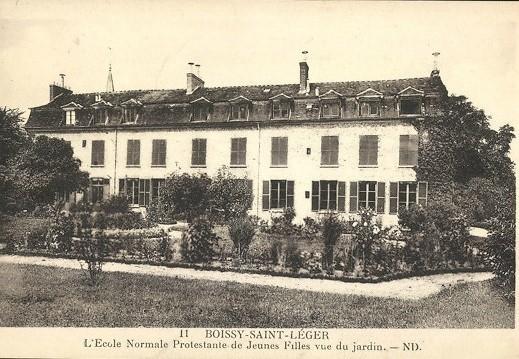
The Training College at Boissy welcomed its first nine students in January 1858, transferred from the establishment in Rue Neuve-Sainte-Geneviève in Paris. The chaplaincy of the Training College served both pupils and teachers, most of whom spent Sundays at Boissy.
The first headmistress, Madame Giroud-Ferroer, assisted by a deputy, taught all subjects except music. Pastor Élie Castel, chaplain to the Deaconesses of Reuilly from 1859 to 1861, was entrusted with the weekly course in religious instruction. He presided over Sunday worship within the premises of the Training College, together with Pastors Gaubert and Franck Vermeil. The Hottinguer family and Madame François Delessert, mother of Caroline Delessert, frequently attended these services.
From 1865 onwards, Pastor Eugène Casalis, from the parish of Passy in Paris, participated in religious instruction, chaplaincy duties, and worship services.
At that period, the parish of Boissy-Saint-Léger brought together in a single act of worship the young women of the Training College, their teachers, the Hottinguer family, and Protestants from neighbouring communes.
The Uncertain Years: 1870–1882
In 1870, there were twenty-five trainee teachers, ten of whom sat examinations, together with twelve students in the small boarding school that served as a training school.
From the month of August, teaching was interrupted, and the seven pupils originating from occupied Alsace were transferred to Nérac in the Lot-et-Garonne. The buildings suffered damage during the war. The school reopened in November 1872.
From 1873 to 1875, Pastor Eugène Casalis responded to the requests of Caroline Hottinguer-Delessert, who financed the rehabilitation works of the Normal School.
However, the activity of the SEIPP declined because the law of 1878, requiring every département to maintain a training college for female teachers, hindered the development of Protestant schools.
Within the Framework of Public Secularism: 1886–1908
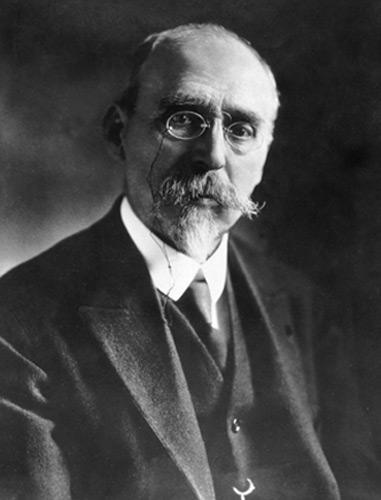
From 1880 onwards, the creation of the École Normale Supérieure for primary education for young women at Fontenay-aux-Roses by Ferdinand Buisson and Pastor Félix Pécaut introduced competition for the existing institution.
Nevertheless, Rodolphe Hottinguer continued the work begun by his parents. Pastor Paul Labeille combined the functions of General Agent, based at 4 Rue de l’Oratoire du Louvre, chaplain to the Training College for Young Women, and pastor of the parish at Boissy from 1886 to 1912.
His annual reports specify that the Training College was governed by a headmistress. In 1887, this was Madame Juhlin, who was appointed Officer of the Academy in 1895. Élise Burckhardt taught foreign languages to the future schoolmistresses.
1912–1949

From 1912 to 1935, Pastor Albert Valez, the last General Agent of the SEIPP, was responsible for the Protestant community of Boissy-Saint-Léger. From 1935 to 1944, Pastor Paul Schmidt, Director of Protestant Independent Education, succeeded him.
The latter served simultaneously as pastor of the Protestant Grouping of Boissy-Brévannes-Sucy and chaplain to the Training College at Boissy. In 1944, the deaconess Sister Marthe Juncker continued this pastoral ministry.
The School finally closed its doors in 1949.
The Bernard Palissy School Takes Over (1951)
In 1951, the Bernard Palissy School, a private Protestant institution for primary and secondary education founded in 1942 by France Durrleman, opened, in addition to its original Paris site, a second co-educational school within the premises of the former Training College for Young Women at Boissy-Saint-Léger.
From the beginning of the 1960s, primary classes were abolished in favour of secondary education. In 1992, the Bernard Palissy Lower and Upper Secondary School consolidated all its educational activities within the Val-de-Marne. It now welcomes more than three hundred pupils from the first year of secondary school to the final year, drawn from all social backgrounds.
Operating under an association contract with the State, it perpetuates today the presence of Protestant education that has been attached to this site for more than a century.
During the 1990s, the Bernard Palissy School participated in the creation of the School Council of the Fédération Protestante de France alongside four other Protestant institutions under contract: the Gymnase in Strasbourg, the private schools Lucie Berger (nursery to lower secondary) and Jean Sturm (upper secondary), the Protestant Primary School of Endoume in Marseille, the Marie Durand Elementary School in Nîmes, and the Maurice Tièche private school complex in Collonges-sous-Salève in Haute-Savoie.