Olivétan's Bible

Lefèvre d’Etaples’ Bible, Antwerp. The 1534 edition, by Martin Lempereur
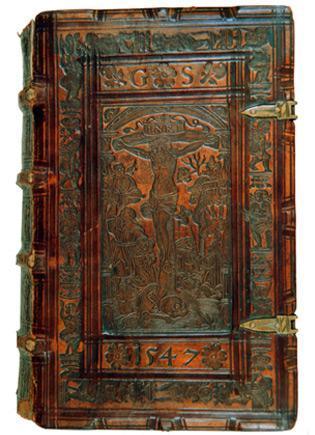
Luther's New Testament binding
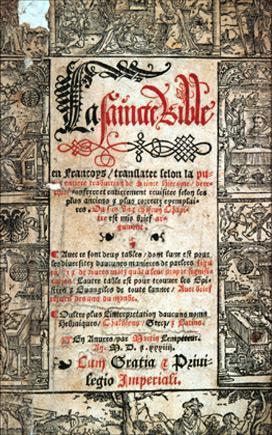
Lefèvre d’Etaples’ Bible, Antwerp. The 1534 edition, by Martin Lempereur
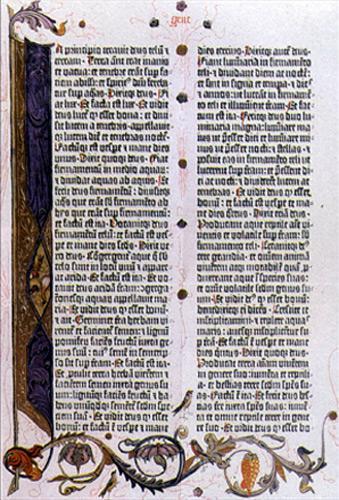
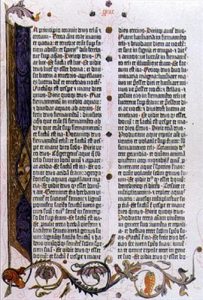
36 lines Gutemberg Bible
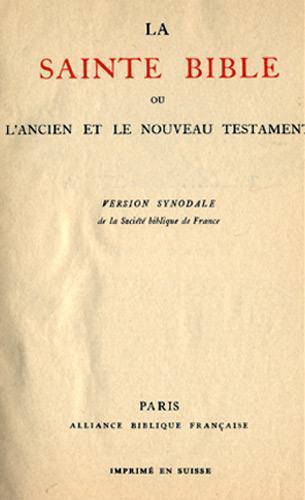
Bible, Synod version, 19th century, French Bible Society
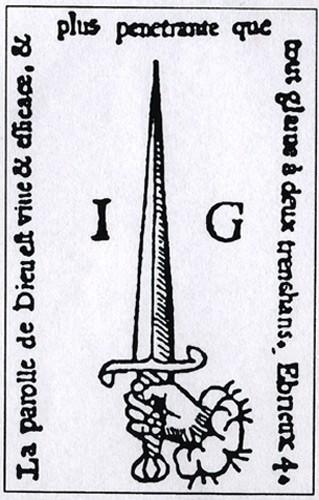
Sword Bible, revised edition of Olivétan’s Bible, edited in Geneva by Jean Girard, 1534
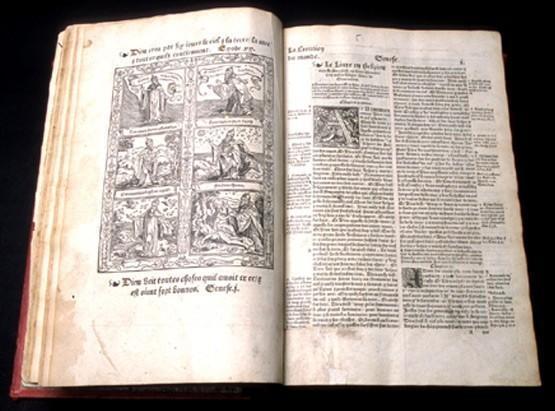
Bible, Antwerp. The 1534 edition, by Martin Lempereur

Latin and Greek New Testament, Erasmus, 1516
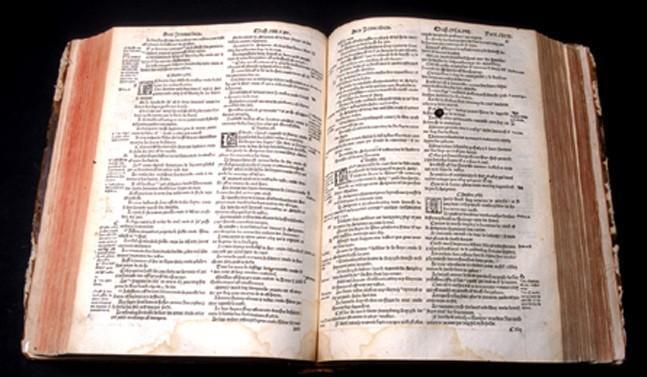
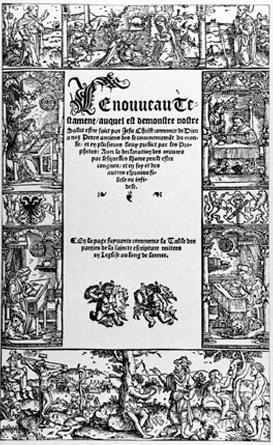
Olivétan’s French Bible, 1535 edition by Pierre de Wingle in Neuchâtel
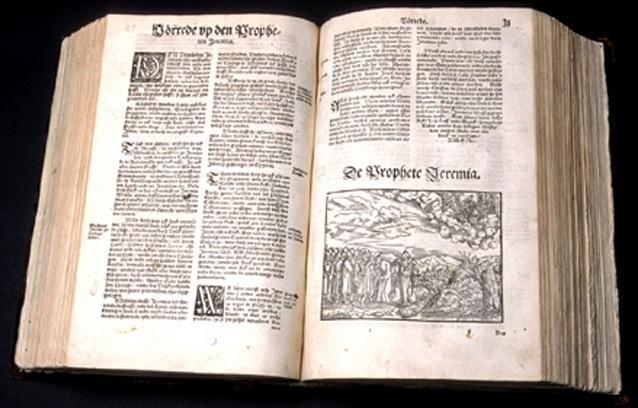
Luther’s Bible, Wittenberg, 1561
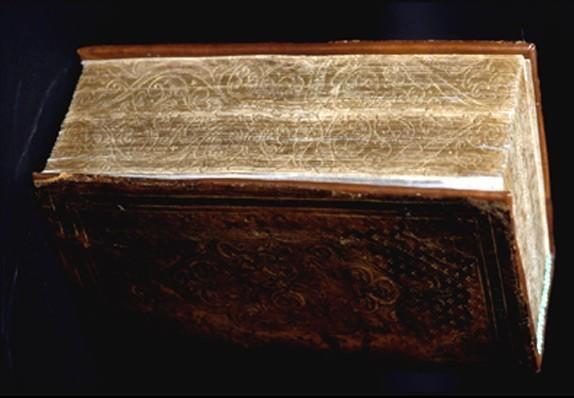
Geneva Bible, by François Perrin 1563
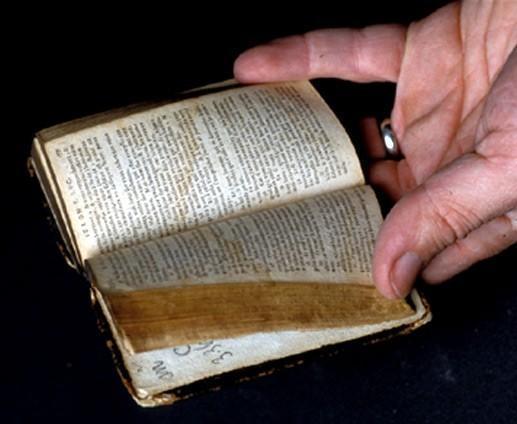
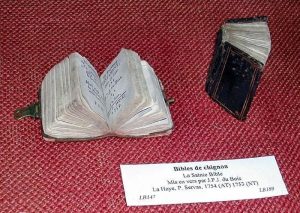
So-called « bun » Bible (18th century
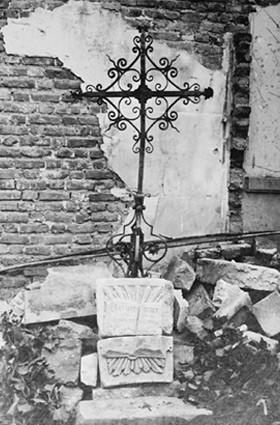
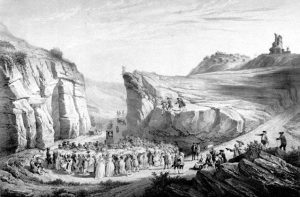
Stone bible and cross from the former temple in Rouen (76) destroyed in 1914
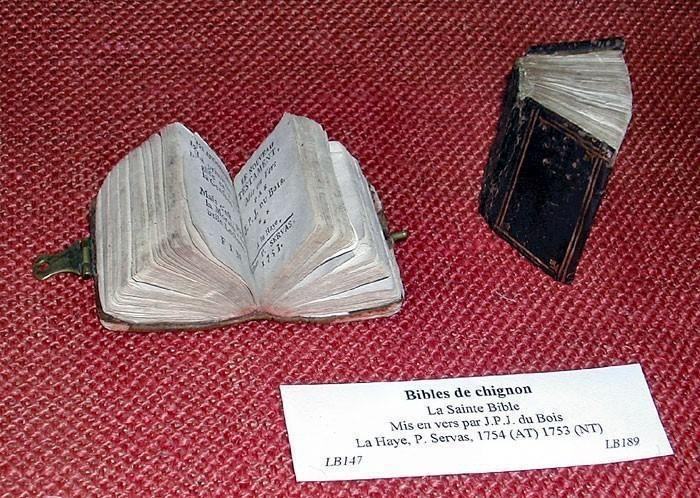
Bibles that could be hidden in a lady's bun

Bible translated by Sebastien Castellion, Basel, for Jehan Hervage, 1555
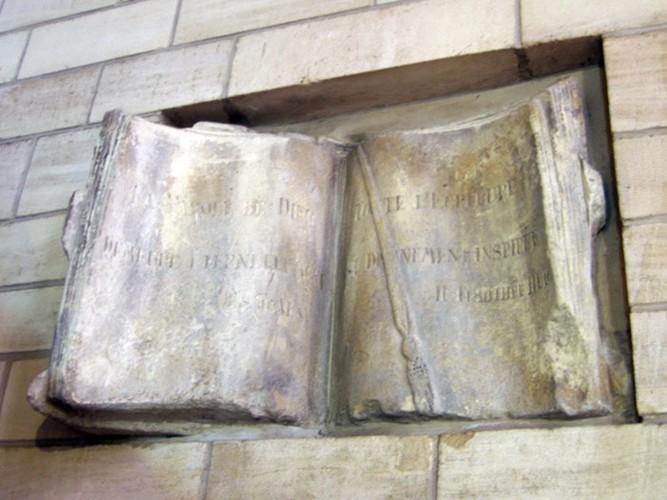
Stone Bible