Translations of the Bible
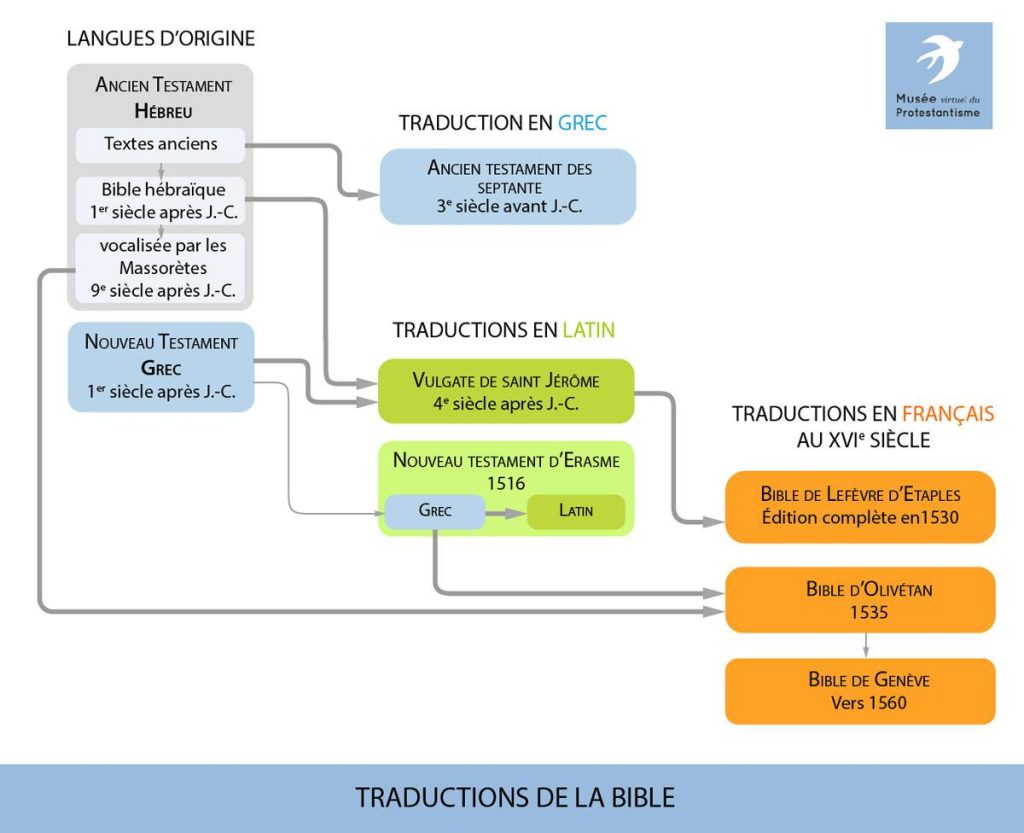
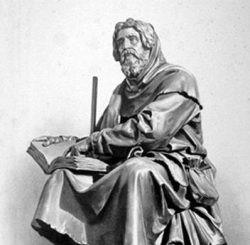
Within the Catholic Church, theology and preaching were grounded in the Latin text of the Vulgate, the first translation attributed to Saint Jerome in the fourth century.
In 1545, the Council of Trent granted the Vulgate a status of authenticity: “the sacred synod declares and ordains that this ancient edition of the Vulgate (…) is to be held as authentic in public readings, disputations, sermons, and expositions”.
At the end of the fifteenth and the beginning of the sixteenth century, the rise of Humanism, a movement characterised by a return to the sources of Greco-Roman antiquity, fostered the Reformation by:
- emphasising the study of the Bible and the importance of its translation into vernacular languages;
- publishing biblical texts without the commentaries of the Church Fathers.
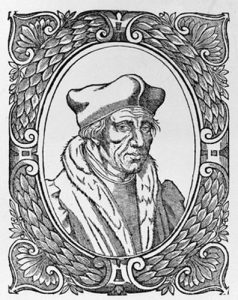
The founder of the Meaux Circle, Lefèvre d’Étaples, translated the New Testament into French from the Vulgate (1524). His translation was condemned by the Church. The most celebrated biblical humanist of the Renaissance, Erasmus, published five editions of the Greek text of the New Testament.
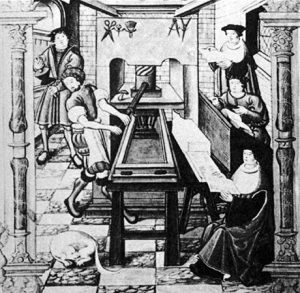
It is important to recall the immense impact of the printing press on the dissemination of ideas and, in particular, on the development of the Reformation.
Lefèvre d’Étaples completed a full translation of the New Testament in 1523 and then of the Old Testament in 1530, again based on the Vulgate.
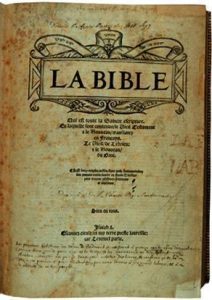
It was Olivétan who earned the distinction of producing, in 1535, a translation directly from the Bible’s original languages.