
Le déroulement
de la guerre 1702-1704
La guerre ne dure que deux ans, mais elle mobilise deux maréchaux de France et 25000 soldats. Le pays est mis à feu et à sang par les violences commises de part et d’autre.
L'année 1702
-
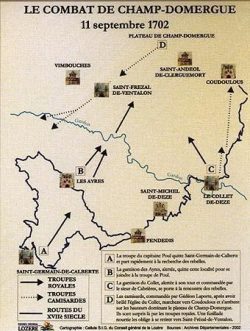
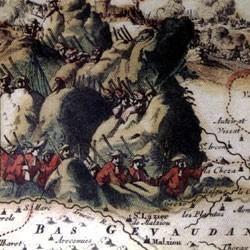
Carte des combats de Champdomergue

- 24 juillet : Meurtre de l’abbé du Chayla au Pont-de-Montvert par une petite troupe conduite par Abraham Mazel et Esprit Séguier. Puis meurtre de deux curés et d’une famille catholique au château de la Devèze.
- Début août : Condamnation et exécution au Pont-de-Montvert d’Esprit Séguier.
- 11 septembre : À Champ-Domergue, premier combat sérieux des Camisards contre les troupes royales : l’issue est incertaine.
- 22 octobre : Combat du Témélac. Gédéon Laporte, le plus vieux chef Camisard est tué. Sa tête et celles de quelques compagnons sont exposées à Barre-des-Cévennes, Anduze, Saint-Hippolyte et Montpellier. L’intendant du Languedoc, Basville, croit la révolte matée. C’est alors que deux nouveaux chefs se révèlent : Pierre Laporte dit Rolland et Jean Cavalier.
- 24 décembre : Jean Cavalier met en déroute les 700 soldats de la garnison d’Alès avec seulement 70 hommes.
L'année 1703
-
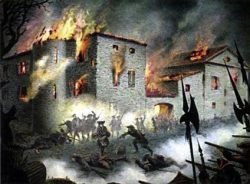
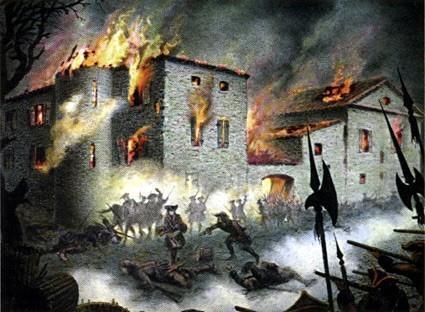
Le brûlement des Cévennes, plaque de verre peinte de Samuel Bastide © Musée des Vallées Cévenoles
- 12 janvier : La troupe de Cavalier remporte un succès au Val-de-Barre (près de Nîmes) et oblige le comte de Broglie, commandant des troupes royales à se retirer.
- Février : La Cour s’inquiète et remplace le comte de Broglie par le maréchal de Montrevel à la tête des troupes en Languedoc. De nouvelles troupes arrivent.
- 26 février : Le chef camisard Castanet et sa troupe massacrent les habitants de Freissinet-de-Fourques (canton de Meyrueis), à la suite de vexations faites aux protestants du voisinage.
- 6 mars : Défaite des camisards par Montrevel à Pompignan, l’espoir renaît dans les rangs catholiques.
- 1er avril : Montrevel massacre des participants à une assemblée clandestine au Moulin de l’Agau (près de Nîmes).
- Avril : Déportation à Perpignan des habitants de Mialet et Saumane, trop favorables aux révoltés, Montrevel s’en prend à la population parce qu’il sent son impuissance face à une guérilla qui bénéficie de la complicité de la population.
- 29 avril : Défaite de Cavalier à la Tour de Billot (près d’Alès).
- Septembre : Les camisards tentent d’étendre la révolte en Rouergue. Les camisards massacrent des habitants catholiques de Saturargues (près de Lunel).
- Automne : « Brûlement des Cévennes ». Les autorités décident, avec la permission du roi, de dévaster les Cévennes et de les dépeupler pour priver les révoltés de leurs appuis parmi la population. Entre octobre et mi-décembre, 466 villages et hameaux sont détruits par les troupes royales commandées par le brigadier Julien. Les habitants sont déplacés vers des régions catholiques. Ces mesures n’ont pas l’effet escompté. De nombreux cévenols rejoignent les troupes camisardes. Devant la difficulté des troupes royales à rétablir l’ordre, les catholiques arment des partisans appelés « cadets de la croix » ou « camisards blancs ». Ils contribuent à la confusion en pillant et massacrant.
L'année 1704
-
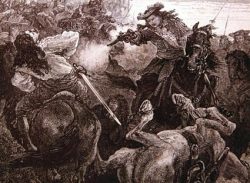
Mort de Rolland, gravure © L1220 - Musée du Désert

- 15 mars : Grande victoire de Cavalier dans la plaine au Devois de Martignargues (canton de Vezenobres) contre un régiment de Marine.
- Fin mars : Les camisards tentent de soulever le Vivarais.
- Avril : En raison de ses échecs, le maréchal de Montrevel est remplacé par le maréchal de Villars.
- 16 avril : Avant de partir, Montrevel inflige une sévère défaite à Cavalier à Nages (canton de Sommières).
- 19 avril : Les troupes royales découvrent les magasins de vivres et de munitions de Cavalier dans les cavernes d’Euzet.
- 20 avril : Arrivée de Villars qui propose de négocier.
- Mai : Début des négociations entre Villars et Cavalier. Cavalier accepte de se rendre sans condition.
- 13 août : Mort de Rolland au Château de Castelnau-les-Valence.
- Octobre : Les principaux chefs camisards se rendent et quittent la France.
Bibliographie
- Livres
- BOSC Henri, La guerre des Cévennes, Presses du Languedoc, Montpellier, 1985-1993, Volume 6
- CABANEL Patrick et JOUTARD Philippe, Les camisards et leur mémoire, 1702-2002, colloque du Pont-de-Montvert (25 et 26 juillet 2002), Presses du Languedoc, Montpellier, 2002, p. 278
- COURT Antoine, Histoire des troubles des Cévennes ou de la Guerre des Camisards sous le régime de Louis le Grand, Presses du Languedoc, Montpellier, 2002
- JOUTARD Philippe, Les camisards, Gallimard, collection Folio Histoire, Paris, 1994
- MAZEL Abraham, MARION Élie et BONBONNOUX Jacques, Mémoires sur la Guerre des Camisards, Presses du Languedoc, Montpellier, 2001
- Vidéos
- La Guerre des Cévennes, les origines, Extrait de l'émission "Des Racines et Des Ailes : Du mont Lozère au plateau de l'Aubrac" diffusée le 29/06/2016. | Lien
Parcours associés
-
La guerre des Cévennes (1702-1704)
La guerre des Cévennes est le nom donné au XVIIIe siècle à la guérilla qui ravage les Cévennes et le Languedoc au début de ce siècle. La population se révolte...
Notices associées
-
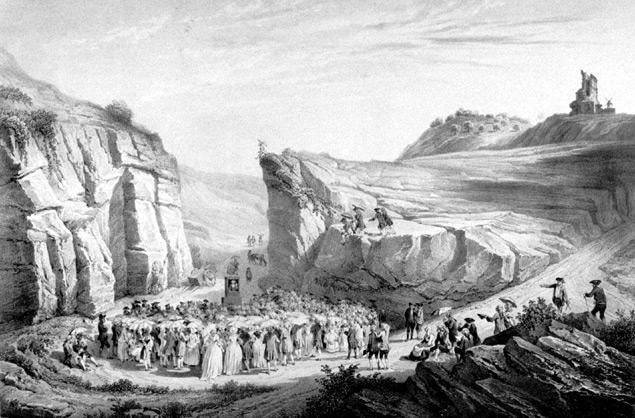
Les assemblées clandestines
Bien avant la révocation de l’Édit de Nantes (1685) la liberté du culte protestant est remise en cause. À la révocation de l’Édit de Nantes, les trois quarts des protestants... -
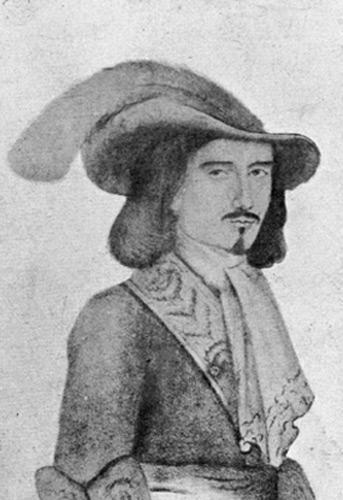
Jean Cavalier (1681-1740)
-
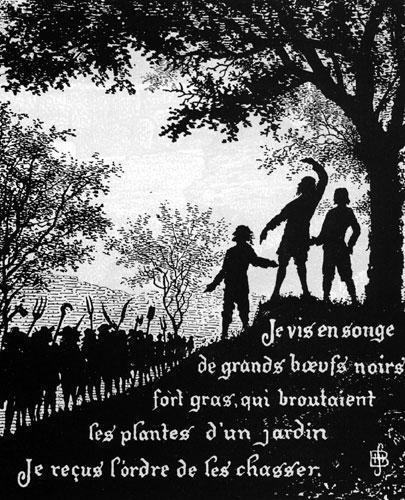
Abraham Mazel (1677-1710)
Abraham Mazel, prophète et combattant, est à la fois le premier et le dernier des Camisards. -

Les Camisards
De simples artisans et paysans mettent en échec pendant près de deux ans les troupes de Louis XIV, une des meilleures armées d’Europe, et tiennent tête à deux maréchaux de... -
Les origines de la guerre des Camisards
Après la Révocation de l’édit de Nantes en 1685, les temples sont détruits et l’exercice de la religion réformée est interdit. Mais des laïcs, prédicants puis prophètes, prennent la relève... -

La fin de la guerre des Camisards
Les chefs camisards se rendent les uns après les autres et négocient avec le maréchal de Villars en ordre dispersé. Des tentatives pour relancer l’insurrection ont lieu jusqu’en 1710, mais...